
Click Here if you listened. We’d love to know what you think. There is even a spot for feedback! Read along below!
The Art of the Bees Cut-Out
By: Joby Carpenter – Arbuckle Mountain Honey, Southern Oklahoma

Every beekeeper loves to catch a swarm hanging from a tree branch. But sometimes the swarm moves somewhere much harder to reach — like inside a wall of a home, attic, utility shred, etc. That’s when the real adventure begins.
When Bees Decide to Swarm
As most beekeepers know all too well, the honey bee’s natural reproduction as a superorganism is the remarkable process called swarming. It truly is a marvelous event to witness. When half the colony leaves with the laying queen, it can drastically reduce the honey crop that colony can produce for the season if the beekeeper is not managing well. As well as cause other challenges depending on where they decide to take up residence in hollow spaces.
When the Swarm Moves into the House
Most beekeepers are familiar with getting a call about a swarm hanging on a nearby bush, fence, or tree branch and rushing over to shake them into a box to capture those elusive “free bees” we often hear about. But what about the swarm that doesn’t get captured in time before it moves into a nearby shed, or someone’s home.
This is where some beekeepers can step in to help both the bees and the homeowner…maybe. In many cases, these now feral colonies would not survive the coming Winter if left in this wild feral natural state. Performing a cut-out of a building allows the bees to be rescued and relocated while also removing the problem for the homeowner.
Unlike capturing a swarm from a tree branch, a cut-out is usually not a free service. It often requires more advanced carpentry skills and involves cutting into walls, ceilings, or other structures to remove the colony. Be sure your liability insurance is current. However, it provides an opportunity for experienced beekeepers with the proper tools and skills to serve as a positive representation of the greater beekeeping community.
Expect the Unexpected
Over the years we have performed many such cut-outs. Some are simple, easy-to-reach colonies that take less than an hour to remove, while others turn into all-day adventures. One thing they all have in common is the excitement of the unknown.
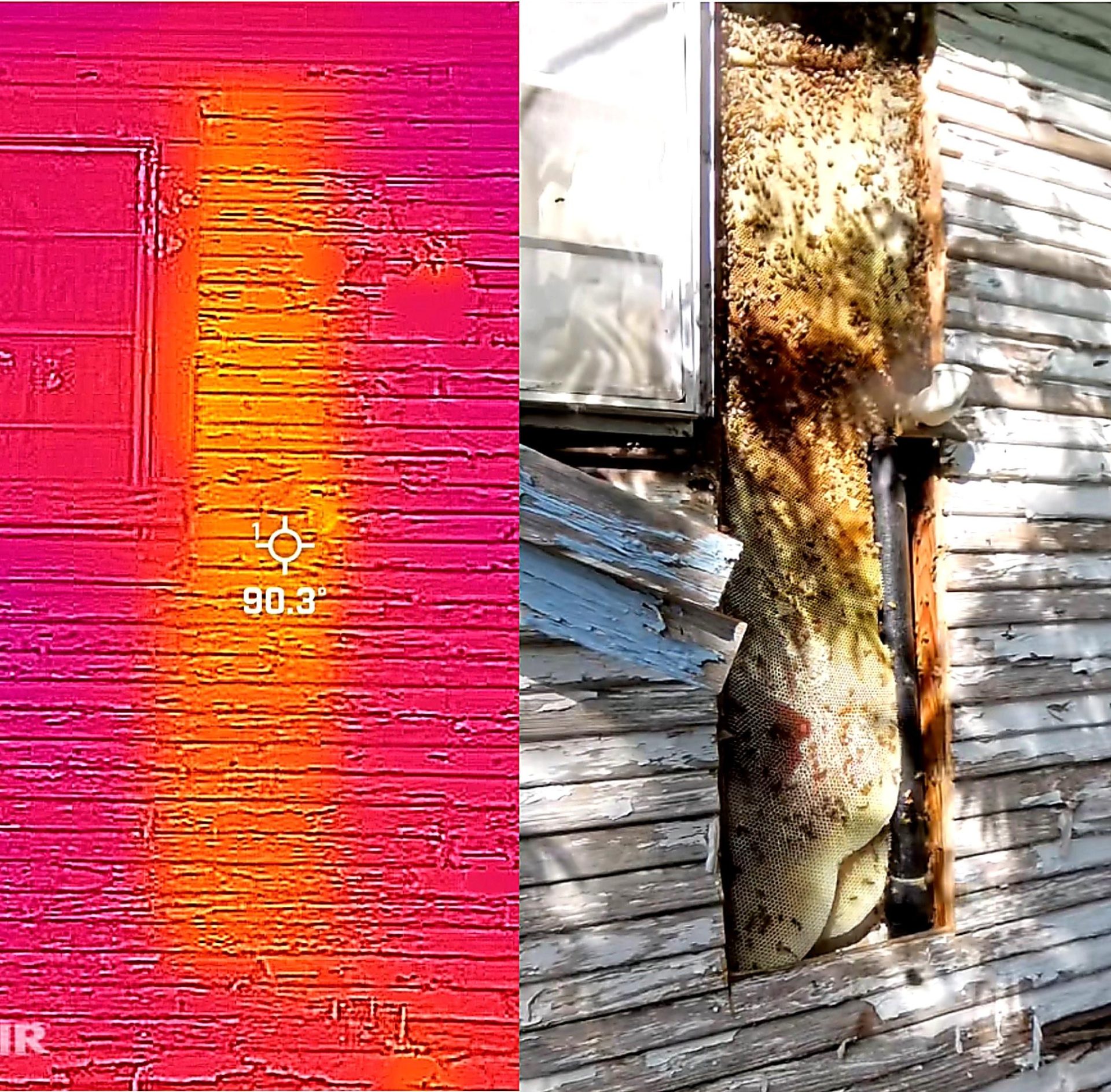
We use a variety of tools to get the job done safely and efficiently. One of the most useful tools is a thermal imaging camera. This allows us to determine the size and location of the colony inside a wall or attic before making any cuts — it’s almost like having x-ray vision. Obviously, we don’t want to start cutting holes in someone’s house guessing where the bees might be and end up leaving a larger mess behind. And who is going to fix the hole and damage left behind.
Another essential tool is a bee vacuum. This allows us to gently remove the bees from the comb while collecting them safely so they can later be reunited with their brood in a hive box.
One memorable cut-out involved a colony that had built comb inside the wall of an old farmhouse for several years. By the time we opened the wall cavity, the colony had filled a space 2 feet wide by 8 feet tall with comb and honey. What started as a quick afternoon removal turned into a full day of carefully removing comb and relocating thousands of bees. We have included a QR code link to the video of this removal on our Facebook page.
Removing the Colony
Once the cavity is opened and we have access to the colony, the process becomes fairly straightforward. We vacuum the bees from the combs and begin removing the comb while keeping an eye out for the queen. If we locate her, we place her in a cage and continue the removal process.
After all the comb has been removed and the bees collected, we cut the brood comb into sections sized to fit our frames. Using rubber bands to hold the comb in the wood frames, we then place these frames into a brood box for transport back to the apiary.
On some jobs we close up the wall or opening for the homeowner, while in other cases they arrange for a carpenter to complete the repair later.
Back to the Apiary
Once back at the apiary, we release the queen back onto the brood frames and shake the collected bees from the vacuum box into the hive. The colony is then fed sugar syrup for several weeks while they become oriented to their new location and begin foraging.
Any honeycomb removed during the cut-out is collected in buckets. Because of its weight and fragility, it usually cannot be placed into frames. This often becomes a small bonus for the beekeeper — a sweet snack on the drive home after a job well done.
At the end of the day, a cut-out is a rewarding experience. We help save a colony of bees that might not otherwise survive, while also helping homeowners solve a difficult problem. Just as importantly, we leave a positive impression of beekeeping with members of the public.
