
More Than Just Honey
Click Here if you listened. We’d love to know what you think. There is even a spot for feedback! Read along below!
By: Richard Wahl
Beyond the Honey Jar
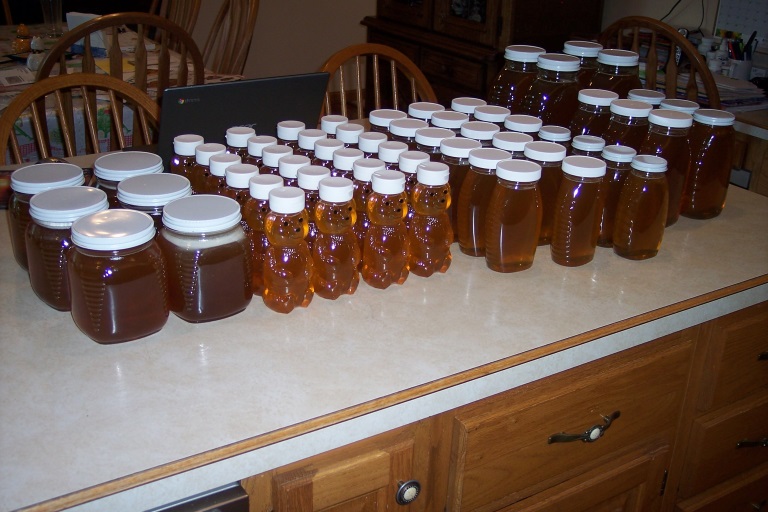
Most people who decide to keep honey bees do so for one reason, the honey. They picture amber jars lined up on a kitchen shelf, honey spread over biscuits, stirred into tea, or perhaps sold at a local farmer’s market. Honey certainly remains the primary product of the hive, but it is by far not the only thing bees produce. As beekeepers gain experience, they often discover that a hive produces a surprising variety of useful products. Beeswax can become candles or furniture polish. Honey can be transformed into creamed honey, mead, sauces, and even gardening aids. Propolis, pollen, royal jelly, and other hive products have their own devoted followers. One of the enjoyable aspects of beekeeping is learning that almost nothing from the hive needs to go to waste. The beekeeper that starts with honey often ends up experimenting with wax products, cut comb honey, lotions, lip balms, and many other creations.

More than Just a Sweetener
Most people use honey as a substitute for sugar; but its usefulness extends much farther into cooking and baking. Honey can replace sugar in many recipes. Because honey contains moisture, adjustments may be needed when baking. As a general rule of thumb, one cup of honey can replace about one and one-quarter cups of sugar while slightly reducing other liquid ingredients. Honey works particularly well in homemade breads, barbecue sauces, marinades and salad dressings. It can also be used in granola, oatmeal, yogurt, and of course, tea or coffee. Different flower sources create different flavors, making each variety uniquely suited to certain foods or beverages like mead. Clover honey tends to be mild, while basswood, buckwheat, or wildflower honeys may provide stronger tastes. Honey butter is particularly worth trying. Mix one cup of softened butter with ¼ cup of honey. Whip the ingredients together until smooth and spread on biscuits, cornbread, pancakes or dinner rolls. Honey mustard is another favorite in our house. Mix ¼ cup of honey with 2 tablespoons of your favorite mustard. Add 2 tablespoons of apple cider vinegar and ½ cup of olive oil. Mix these ingredients thoroughly and refrigerate until used on most any type of salad. A honey marinade made up of ⅓ cup of honey, three crushed cloves of garlic and ¼ cup of soy sauce works exceptionally well on chicken, pork, or salmon. There are many other recipes in cookbooks that incorporate honey to enhance baked goods, dressings or marinades.
Other Honey Uses
Honey is a natural preservative. Long before refrigeration existed, honey was used to preserve foods. Its low moisture content and natural acidity make it difficult for many microorganisms to survive. Archaeologists have discovered ancient honey in closed containers that has remained edible from thousands of years ago. Honey can be used for minor skin applications. Throughout history honey has been used in home remedies for minor cuts, scrapes, and burns. I have used it on bandages to help heal minor cuts or scrapes. In my experience it works just as well as commercial salves and ointments. There are some modern medical-grade honey products that are now manufactured specifically for wound care. While commercial medical products should be used when appropriate, historical usages help explain why honey continues to fascinate both researchers and consumers. Any significant wound should be evaluated by medical professionals before relying on honey applications.
Honey in Gardening
Many gardeners dip plant cuttings into honey before placing them into rooting media. Honey helps reduce bacterial growth and keeps the cut surface moist while roots begin to develop making it a useful natural rooting aid. Residual waste honey can also be used in wasp and/or yellow jacket bee traps. At the point where the curved top of a two liter plastic soda bottle becomes the straight vertical side, cut completely around the bottle. Into the bottom portion, add one banana peel, one cup vinegar (or apple cider vinegar or apple juice) to one-half cup honey (or sugar), and one cup water. Remove the bottle cap and invert the cut top, inserting it upside down into the lower portion of the bottle. Tape, staple or make small cuts and folds to hold the inverted top in place above the liquid level. Place the trap where yellow jackets or wasps are a problem. For some reason honey bees and other native bees do not seem to be attracted to this mix, but yellow jackets and bald faced hornets in particular are. They can enter through the narrow neck, but cannot find their way out. This is especially useful in Spring when newly emerged yellow jacket queens are searching for places to establish new nests or during honey harvest when opening hives seems to attract more yellow jackets and wasps.
It is not unusual here in Michigan to remove a pollen saturated frame or two from hives during Spring or early Summer inspections to provide more room for the queen to lay eggs. Pollen is plentiful and industrious bees can overwhelm frames in the brood area by collecting pollen from numerous sources. To remove pollen from frames soak them in water for three or four days and wash the pollen out with a garden spray hose. If the pollen residue in the water container or the pollen washed off the frames is captured, it can be used as a fertilizer on garden plants. Pollen is a highly nutritious organic material rich in proteins and micronutrients, making it a great fertilizer or fast-acting natural compost for soil health. Be sure to dry the washed out frames completely before replacing them back in a hive or it could lead to an outbreak of chalkbrood. Do not ask me how I know this.
Cut Comb Honey
While liquid honey is popular, cut comb honey is often considered a specialty item. Many people who grew up around farms remember receiving chunks of comb honey as a special treat. The wax comb is completely edible. Some people swallow it while others chew it much like gum before discarding the remaining wax. Producing attractive, quality cut comb requires planning. The best comb honey is usually produced early in the nectar flow during periods of heavy wax production. Strong colonies using thin natural wax foundation or starter strips are a must. Freshly produced comb should be nearly white. Older comb tends to darken and is less attractive to customers. I find that when customers ask about comb honey they often purchase it because they enjoy the novelty, they believe it is less processed or they may enjoy chewing the wax. Clear plastic containers for cut comb honey are designed to showcase the honeycomb’s natural beauty. Standard sizes hold between 8 oz. and 16 oz., with any excess liquid honey normally drained before packaging for a clean, professional display. Freezing for at least 24 to 48 hours kills any hidden wax moth eggs or small hive beetle larvae that may be present in the comb. If left alive, these pests will hatch and destroy the honeycomb, ruining the product before it reaches the customer. Honey should never be refrigerated, but freezing it prevents crystallization and keeps the comb visually appealing when ready to be sold. Beekeepers find that cut comb commands a significantly higher price per pound than extracted honey. I have found that a small square of comb honey served on a cheese board can lead to conversations about the entire honey making process.
Many beekeepers take comb honey one step further by producing it in specialty containers designed to eliminate the need for cutting and packaging. Ross Rounds produce perfectly round sections of comb honey enclosed in clear plastic rings, creating an eye-catching product that sells well. Others prefer Hogg Halfcomb containers, where the bees build the comb directly into a clear plastic container that becomes the retail package. Square wooden section boxes, a traditional favorite dating back well over a century, produces attractive blocks of comb honey framed in wood that appeals to customers looking for an old-fashioned presentation. There may be a bit more expense to set up a specialty honey super, but the effort is rewarded with honey exactly as the bees stored it in the hive. Regardless the system used, producing premium comb honey requires a strong nectar flow, vigorous colonies, and careful timing. When everything comes together, these specialty comb products can become the centerpiece of a honey display.

Creamed Honey
One of the easiest ways for a beekeeper to increase the value of a honey crop is by selling creamed honey. I began producing creamed honey after numerous requests at various sales venues. Although making creamed honey requires an additional step or two, it can sell for 50% or more per pound above the price of liquid honey. Despite the name, it has nothing to do with whipped cream and contains no dairy products. It is simply honey that has been encouraged to form extremely small crystals, giving it a smooth spreadable consistency similar to soft butter or peanut butter. The result is a product that spreads easily and does not drip off toast. Making creamed honey is surprisingly simple. All you need is a countertop stand mixer and a little patience. A seed starter is essential because it provides the necessary tiny crystals that result in the entire batch crystallizing into the same fine, smooth texture. The recommended ratio is 10% seed starter to the amount of honey being creamed. I generally start with four to six pounds of honey and a half pound of starter. Use the wire whip attachment to mix the honey and seed starter on the slowest speed possible for twenty to twenty-five minutes. Periodically scrape the bottom of the bowl, as the whisk will not completely reach to the bottom. Allow the mixture to rest for about thirty minutes, then mix again on the slowest speed for another twenty to twenty-five minutes. As it mixes, the honey will become a creamy white color (this is where it gets its name), and it develops a smooth, pourable consistency that is noticeably thicker and less runny than liquid honey.
If you plan to add flavorings, use only dry powdered ingredients and add them before the second mixing. A good starting point is one teaspoon per pound of honey. Some recipes recommend one or two tablespoons per pound, which may work well for dried fruit powders, but can easily dominate the honey flavor if finer powders such as cinnamon or cocoa are used. The goal is not to overpower the honey’s natural flavor but simply to complement it, so a little experimentation may be necessary. Avoid adding liquid flavorings. Liquids introduce additional moisture, raising the honey above its desirable moisture content of about 18% and increasing the chance of fermentation or spoilage. Some of the more popular powdered flavorings include cinnamon, vanilla powder, pumpkin spice, maple, and cocoa powder. My experience selling creamed honey at farmers markets and craft shows has been that it is every bit as popular as regular liquid honey. When customers ask what it is, I explain that a pound of unflavored creamed honey and a pound of liquid honey are identical except for their consistency. I compare it to churning cream or milk into butter. With a little “churning,” honey develops that same soft butter to peanut butter consistency while remaining the very same honey. For the best results, allow creamed honey to set and be stored at about 55°F (13°C). If stored in a warmer environment, it may gradually separate and return to a more liquid state, although it will usually remain spreadable.

Photo credit: Richard Wahl
Beeswax
Do not overlook the value of the wax cappings left behind after extraction. Those sticky wax cappings are one of the hive’s most valuable byproducts. Experienced beekeepers often refer to beeswax as their “second harvest.” Considering that bees consume eight to ten pounds of honey to produce just one pound of wax, it is easy to understand why it deserves to be treated as a valuable resource rather than something to throw away. With several inches of water in a stainless steel cooking pot, heat the wax and water to between 150°F and 170°F (66°C to 77°C). Beeswax is flammable and should never be heated directly over high heat or above about 185°F (85°C). As the wax melts at slightly above 140°F (60°C), it will float to the surface of the water. A little stirring will help ensure all of the wax has melted completely. Let it cool overnight and the wax will harden into a cake floating on top of the water. Remove the wax and scrape most of the detritus from the bottom. At that point, I re-melt the wax letting it drip though a double layer of clean white T-shirt stretched over a piece of common window screen, again collecting the filtered wax on top of a one or two inch layer of water. After cooling, the wax will be clean enough to melt once more in a double boiler before pouring it into candle or other molds for sale. Candle making is the most familiar use for beeswax. Beeswax candles have a pleasant natural honey aroma, burn longer than many other types of candles, produce very little smoke and display the warm golden color only natural beeswax can provide. Customers who stop by to purchase a jar of honey may be happy to discover handcrafted beeswax candles sitting alongside the honey. Once people experience the beauty and fragrance of a genuine beeswax candle, they often become repeat customers for both products, giving beekeepers another opportunity to increase the value of every honey harvest.
Other Hive Products
By now it is obvious that a beehive produces far more than just honey. Once beekeepers begin looking beyond the honey supers, they often discover an entire world of products hiding in plain sight. Beeswax can be turned into lip balm, furniture polish, leather conditioner, fire starters, and scented wax melts, all of which make practical items for personal use, gifts, or farmer’s market sales. Some beekeepers also collect bee pollen, which is commonly added to smoothies, yogurt, oatmeal, and cereal, although anyone using pollen should be aware that allergic reactions are possible. Other hive products require a bit more knowledge and specialized equipment. Propolis, often called “bee glue,” is the sticky resin bees use to seal cracks, strengthen the hive, and help reduce the spread of disease. It has become increasingly popular for a variety of commercial products. Bee bread, the fermented pollen stored in comb cells, serves as an important protein source for raising brood, while royal jelly is the remarkable food that allows an ordinary female larva to develop into a queen. Bee venom can also be collected, although doing so is highly specialized and generally left to experienced producers and researchers exploring its potential medical applications. Most beginning beekeepers may never harvest every one of these products, but they serve as a reminder that a healthy colony is a remarkably efficient little factory, producing far more than most people ever imagine.
Diversification
Many hobby beekeepers begin with the single goal of harvesting honey. Over time they discover that a healthy hive can produce much more than jars of liquid honey. Wax can become candles. Honey can become creamed honey. Comb honey can become a premium specialty product. Propolis, pollen, and other hive products may open additional opportunities for those willing to learn more. Perhaps the greatest lesson is that bees are remarkable manufacturers. A colony converts nectar, pollen, and tree resins into an impressive collection of products that people have used for centuries. The more time one spends around honey bees, the more one realizes that the honey jar is only the beginning of the story. Have fun with your bees and do not be afraid to experiment with some of the lesser-known products of the hive. You may discover that your next favorite hive product is one you have not yet tried.
