
Happy Birthday USA
Click Here if you listened. We’d love to know what you think. There is even a spot for feedback! Read along below!
By: Richard Wahl
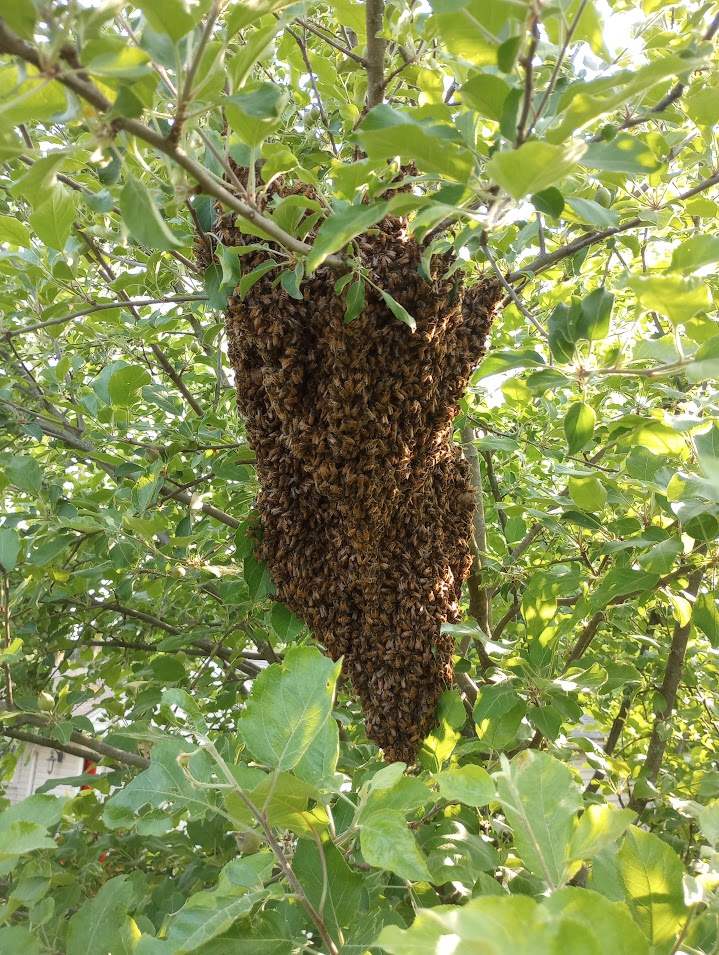
On this 250th birthday of the United States I thought I would present something a bit different. Rather than more information on beekeeping, which has been the focus of this column for the past four and a half years, I will give a brief chronological sequence of key events that have occurred in the management of our very important insect, our honey bee species, namely Apis Mellifera. Honey bees arrived here from Europe long before the United States became a nation. In fact, they were already spreading westward ahead of many settlers, earning the nickname “the white man’s fly” among some Native American tribes1. Apparently even bees knew good farmland and nectar sources when they saw it. The history of honey bee management is really the story of human curiosity mixed with stubbornness, occasional ingenuity, and a fair amount of getting stung while trying to improve things. If you think about it, beekeeping has always attracted a certain kind of adventurist person. Most folks run away from insects carrying tiny lancet needles capable of inducing pain. Beekeepers look at bees and think, “I wonder if I can put those in a box and harvest some honey from them?” So, in honor of America’s 250th birthday, let me take us through the timeline of honey bee management and the people, places, inventions, and occasional accidents that shaped today’s modern beekeeping.

Photo credit: Richard Wahl
Honey Bees Come to the New World
A fossil discovered in Nevada in 2009 (Apis Nearctica)2 indicates that a different species of honey bee existed on the continent roughly fourteen million years ago before going extinct long before human arrival. Our modern honey bees are not native to North America. European settlers brought them across the Atlantic sometime in the early 1600s. The first documented honey bee colonies are believed to have arrived in the Virginia colonies around 1622. The Virginia Company documented sending beehives in a December 1621 letter3, with the bees surviving the three-month’s long journey in the ship’s hold. It makes sense that bees would be confined and travel better in the colder months when they would be most dormant and in a clustered state. These hives were carefully packed on ships with enough honey to sustain the bees during the weeks-to-months long transatlantic journey. Those early bees were the dark European honey bee, Apis Mellifera, sometimes called the German black bee. Upon their arrival they would be housed in then traditional hives such as gums, straw skeps or wooden boxes. They were hardy, defensive, and well suited to colder climates. Some modern beekeepers would probably describe them as “a little spicy”. As settlers expanded inland, bees spread rapidly. Swarms escaped from managed colonies and established themselves in forest trees hollowed by age and weather. By the mid-1700s, wild honey bee colonies were common throughout many of the eastern colonies. When America declared independence in 1776, bees were already woven into colonial life4. Honey served as a sweetener, beeswax was used in candles and waterproofing, and many farmsteads kept at least a few colonies. Back then, if you wanted candles for evening light, you either kept bees or became very friendly with someone who did.
Early American Beekeeping
Eighteenth-century American beekeeping remained fairly primitive by modern standards. Colonies were commonly kept in gums, which were sections of hollow logs stood upright with boards placed over the top. Box hives also became common. The problem was simple: comb was attached directly to the hive walls. Harvesting honey often required cutting comb out entirely. Inspecting brood, checking for disease, or managing swarming was nearly impossible. Still, practical knowledge grew steadily. Farmers learned to capture swarms, recognize nectar flows, and winter colonies. Some even developed local reputations as skilled bee men. Every rural community seemed to have one fellow who could somehow catch a swarm barehanded while everybody else stood at a safe distance pretending they were helping. One important figure during this period was Thomas Wildman of England, whose 1768 book on beekeeping5 influenced colonial practices. Wildman promoted gentler handling techniques and practical hive management. But the true revolution in beekeeping was still ahead.
François Huber and the Mystery of the Queen
In Switzerland during the late 1700s and early 1800s, a remarkable naturalist named François Huber transformed scientific understanding of honey bees6. Huber became blind in his youth, yet through painstaking experiments conducted with the help of his assistant and wife, he uncovered major truths about bee biology. He confirmed that queens mate outside the hive, identified the role of drones in reproduction, and carefully documented colony behavior. Huber also developed the leaf hive, an early observation hive with hinged frames that allowed comb to be examined. Think about that for a moment. A blind scientist advanced bee biology more than most sighted people of his era. There is a lesson in that somewhere about patience, observation, and refusing to let limitations define what can be accomplished.
The Invention That Changed Everything
If modern beekeeping has a Mount Rushmore moment, it occurred in Philadelphia, Pennsylvania, in 1851. That was the year Reverend Lorenzo Lorraine Langstroth7 discovered what we now call “bee space”. Langstroth realized bees were remarkably consistent about preserving a narrow corridor between combs, measuring roughly three-eighths of an inch. Any smaller opening they sealed with propolis, while larger spaces invited additional comb construction. That tiny measurement changed the world of beekeeping. Langstroth designed a movable-frame hive that respected bee space, allowing frames to be removed and replaced without destroying comb. He patented his hive in 18527. Today, nearly every modern hive used in North America still follows Langstroth’s basic design. It is hard to overstate how revolutionary this was. For the first time, beekeepers could inspect brood, control swarming, manage queens, and harvest honey while preserving comb structure. Before Langstroth, beekeeping was part farming and part treasure hunt. After Langstroth, it became manageable livestock husbandry. Of course, bees themselves were unimpressed. They continued gluing everything together with propolis just to remind us who was really in charge.
The Rise of Modern Equipment
Once movable-frame hives became accepted, innovation accelerated. In 1865, Franz Hruschka of Austria invented the honey extractor8. Hruschka’s extractor used centrifugal force to sling honey from the comb while leaving the wax structure intact. This mattered enormously because bees consume tremendous resources producing wax; about eight to ten pounds of honey is consumed by bees to make one pound of wax. Preserving comb allowed colonies to devote more energy toward nectar gathering instead of rebuilding. Not long afterward came wax foundation. Johannes Mehring developed embossed wax sheets in Germany during the 1850s9, helping guide comb construction inside frames. Queen excluders, smokers, improved hive tools, and better protective veils followed. Speaking of smokers, Moses Quinby of New York patented an improved bee smoker in 187310. If you have ever calmed an irritated colony with a few gentle puffs of cool smoke, you owe Quinby a silent thank you. L.C. Root, son-in-law of Quinby, revised Quinby’s 1853 book, Mysteries of Beekeeping Explained as an 1879 edition titled The Mysteries of Bee-Keeping Explained where the smoker was explained11. Without the smoker, many hive inspections would resemble medieval combat.

Photo credit: Root Candles blog article “Eleven Facts about Root Candles,” an archived photo.
The Expansion of American Beekeeping
During the late 1800s, beekeeping expanded rapidly across the United States. Railroads allowed honey and beeswax to move greater distances. Agricultural expansion created vast nectar sources. Beekeeping journals and associations sprang up across the country. The American Bee Journal, founded by Samuel Wagner in Illinois, January 1861, remains one of the oldest continuously published agricultural magazines in the nation. The A.I. Root Company began in 1869 in Medina, Ohio, founded by Amos Ives Root after a swarm of bees landed on his jewelry store window in 186512, sparking a lifelong interest in beekeeping. Root revolutionized beekeeping by inventing and manufacturing improved beehives and equipment, becoming a leading industry supplier by the late 19th century. He founded the journal Gleanings in Bee Culture in 1873, which remains in publication today as Bee Culture magazine. Root authored the comprehensive guide to beekeeping in 1879 titled, The ABC and XYZ of Bee Culture which is still updated and used, frequently referred to as the “Beekeeper’s Bible”. He was the only person to publish an eyewitness account of the Wright Brothers’ early, successful flights including “a full circle” in a 1904 edition of Gleanings in Bee Culture, highlighting his interest in scientific advancements.
Near the turn of the century beekeepers also began transporting colonies for pollination and honey production. In 1894 a pioneering beekeeping operation was founded in Utah by Nephi Ephraim Miller named the Miller Honey Farms13. Miller is often credited with the advent of commercial migratory beekeeping. Miller pioneered moving bees by rail from Utah to California in Winter to maximize honey production. Large apiaries began to appear in states like California, Texas, Iowa, and Michigan. At the same time, different races of honey bees were imported into the United States. Italian bees arrived around 1859 and quickly gained popularity because of their gentleness, productivity, and attractive yellow coloration. Carniolan bees followed later, valued for wintering ability and rapid Spring buildup. Naturally, every beekeeper had opinions about which bee strain was best. Some things never change as even today; ask three beekeepers what bees they prefer and you will receive five opinions.
Scientific Beekeeping and Extension Education
By the early 1900s, bees had finally attracted the attention of universities, government agencies, and probably a few professors who discovered that studying insects was safer than studying politicians. State extension programs helped spread practical management information to rural communities. Researchers studied bee diseases, nutrition, queen breeding, and honey plants. One major concern was foulbrood disease, particularly American foulbrood. Before antibiotics and modern inspection programs, outbreaks could devastate entire apiaries. States established apiary inspection systems to reduce disease spread. Infected colonies were often burned outright. That sounds harsh, but American foulbrood spores can remain viable for decades. Burning infected equipment was frequently the only reliable control method. Many old-time beekeepers still recall the dreaded sight of inspectors arriving with kerosene cans and matches. Another important development came from E. F. Phillips of the United States Department of Agriculture. Phillips helped professionalize American beekeeping through research and education during the early twentieth century14. His writings emphasized careful management rather than luck. That may have disappointed a few fellows who hoped bees could simply be placed in the woods and left alone while the honey magically filled buckets by itself. As Phillips and other researchers demonstrated, successful beekeeping depended upon understanding colony biology, seasonal timing, forage conditions, and proper equipment management, often hard concepts for new beekeepers to grasp. In other words, the bees expected the beekeeper to do at least a little bit of the work.
The Honey Boom and Pollination Era
During the first half of the twentieth century, honey production became an increasingly important agricultural industry in America. Large commercial operations developed throughout the Great Plains, the Dakotas, Florida, California, and the upper Midwest. Sweet clover, alfalfa, orange blossom, tupelo, and buckwheat produced regional honey crops with distinctive flavors and reputations. Some beekeepers followed nectar flows the way carnival workers followed county fairs. In the Dakotas, fields of sweet clover stretched seemingly to the horizon. California offered orange blossom and later almond pollination opportunities. Florida tupelo honey became famous for its delicate flavor and resistance to granulation. In Michigan, basswood and clover remained dependable favorites during good years, although every beekeeper knows the weather always gets the final vote. The development of motorized transportation dramatically changed commercial beekeeping. Trucks gradually replaced horse-drawn wagons and trains. Colonies could now be moved hundreds or even thousands of miles to follow blooming crops. Migratory beekeeping expanded rapidly after World War II. By the 1950s and 1960s, commercial pollination had become nearly as important as honey production itself. Farmers discovered that strong honey bee colonies greatly increased yields in many fruit, vegetable, and seed crops. Almonds in California eventually became the largest managed pollination event on Earth. Today, each February, well over two million colonies are transported into California’s almond orchards. It is the honey bee equivalent of rush hour traffic. Flatbed trucks loaded with colonies roll across American highways from nearly every region of the country. If someone unfamiliar with beekeeping happened to stop at a truck stop next to one of those loads at midnight, they might reasonably wonder what sort of strange occupation requires transporting millions of stinging insects through the darkness. The answer, of course, is agriculture. Honey bees now contribute billions of dollars annually to American crop production through pollination services. In many cases, pollination income exceeds the value of the honey crop itself.

The Arrival of Troubles
Of course, every long story eventually encounters difficulties. For American beekeeping, the second half of the twentieth century brought a series of serious challenges. One of the first major problems involved the arrival of parasitic mites. The tracheal mite, first detected in the United States during the 1980s, affected the breathing tubes of adult bees. Colonies weakened and often died during Winter. But an even greater threat soon followed. In 1987, Varroa destructor mites were discovered in Wisconsin and Florida. Few events in modern beekeeping have changed management practices more dramatically. Before Varroa, many beekeepers managed colonies with relatively minimal intervention. Winter losses occurred, certainly, but healthy colonies often survived for years with little treatment. Varroa changed all of that. These tiny reddish-brown parasites feed upon developing and adult bees while also transmitting over forty viruses and diseases. Left untreated, most colonies eventually collapse. If you ever want proof that size does not determine destructive ability, consider the Varroa mite. A creature about the size of a pinhead managed to create havoc throughout an entire agricultural industry. The arrival of Varroa forced beekeepers to become far more attentive to mite monitoring and integrated pest management (IPM). Chemical treatments, screened bottom boards, drone trapping, resistant bee breeding, and organic acids all became part of the beekeeper’s vocabulary. Naturally, every beekeeper also developed strong opinions about mite control methods. Again, some things never change; ask eight beekeepers their opinion of mite treatments and get ten answers. Meanwhile, additional problems emerged as habitat loss reduced forage diversity. Expanding urbanization replaced clover fields and wildflower meadows with parking lots and subdivisions while pesticide concerns increased. Africanized honey bees spread into the southern United States after escaping from breeding programs in Brazil during the 1950s and gradually moved northward15. That particular chapter gave newspaper editors enough dramatic headlines to last for years. Movies and television often portrayed “killer bees” as airborne monsters capable of chasing people for miles with malicious intent. In reality, Africanized bees primarily presented challenges because of heightened defensiveness and swarming tendencies, especially in southern climates. Still, most beekeepers prefer colonies that do not greet inspections with the enthusiasm of a prison riot. Then came Colony Collapse Disorder (CCD) during the mid-2000s. Beginning around 2006, beekeepers reported unusual colony losses in which adult bees simply disappeared from hives, leaving brood and food stores behind. Scientists investigated numerous possible contributing factors including mites, viruses, pesticides, nutrition, and stress from migratory pollination. To this day, most researchers believe no single cause fully explains CCD. Instead, multiple stressors likely combined to weaken colonies. In many ways, honey bees became indicators of broader environmental pressures affecting modern agriculture and ecosystems.
The Rise of the Small-Scale Beekeeper
Interestingly enough, while commercial beekeeping faced mounting challenges, public interest in beekeeping also began to surge. During the late twentieth century and especially after 2000, backyard and hobby beekeeping grew tremendously across America. Urban beekeeping appeared in cities from New York to Detroit to Chicago to San Francisco. Rooftop apiaries became fashionable. Gardening, local food movements, and environmental awareness encouraged many people to try keeping bees. Some were drawn by honey production while others just wanted to help pollinators. And a few simply discovered that once you start watching a healthy colony on a warm Summer evening, it becomes strangely difficult to walk away. There is something timeless about standing beside a hive while thousands of workers return home carrying pollen. The sound alone can quiet a troubled mind better than many modern distractions. Of course, new beekeepers also discovered that bees occasionally possess minds of their own. Packages sometimes abscond, queens fail and swarms land forty feet up in trees belonging to neighbors who already seemed slightly suspicious of your hobby. Honey supers somehow gain twenty pounds between the beeyard and the truck. And every beekeeper eventually learns that if you set a hive tool down for “just a second,” it instantly disappears into another dimension. Despite the frustrations, interest continued growing and local bee clubs expanded rapidly. State associations developed educational programs with online videos and internet forums that allowed beginners access to information unimaginable to earlier generations. A beekeeper in rural Michigan could now exchange ideas instantly with another beekeeper in Texas, California, or Florida. Of course, the internet also allowed misinformation to spread rapidly. A fellow could now receive twelve completely contradictory answers to a simple bee question before even finishing breakfast. Again, some things never change.

Selective Breeding and Modern Research
Modern American beekeeping continues evolving through scientific research and selective breeding programs. Researchers have developed hygienic bee lines capable of detecting and removing diseased or mite-infested brood. Russian honey bees, imported and evaluated beginning in the 1990s, demonstrated increased resistance to Varroa mites in some situations. Queen breeders across the country now focus heavily on gentleness, productivity, Winter survival, and mite resistance. Instrumental insemination techniques allow highly controlled breeding programs. Genetic research continues improving our understanding of bee health and behavior. At the same time, universities and government agencies study nutrition, pesticide interactions, native pollinators, and habitat restoration. The more scientists learn about honey bees, the more remarkable these insects appear. A worker bee may live only a few weeks during Summer, yet within that short lifespan she performs multiple specialized tasks. She cleans cells, feeds brood, produces wax, guards the entrance, processes nectar, and finally forages in the field before literally working herself to death. Meanwhile, the colony itself functions like a single superorganism. No central authority directs traffic. No bee carries a blueprint. Yet through pheromones, instinct, and communication dances, thousands of individuals coordinate remarkably complex behavior. Frankly, if human government operated as efficiently as a strong honey bee colony during a nectar flow, most of our problems might disappear by Tuesday afternoon.
Beekeeping in America at 250
And so here we are in 2026, we are celebrating two hundred and fifty years of American independence while also reflecting upon more than four centuries of honey bee history on this continent. From primitive gum hives, skeps and boxes carried aboard wooden sailing ships to modern pollination trucks rolling down interstate highways, American beekeeping has traveled an extraordinary road. The honey bee accompanied settlers moving westward across mountains and prairies. Bees pollinated orchards, gardens, and crops that helped feed a growing nation. Beeswax lit homes and churches before electricity arrived. Honey sweetened tables before refined sugar became common. Generations of beekeepers contributed observations, inventions, and hard-earned knowledge along the way. Some discoveries emerged from universities and laboratories. Others came from old bee yards where weathered beekeepers quietly learned lessons directly from the bees themselves. Both kinds of knowledge still matter. Perhaps that is one reason beekeeping continues attracting people from every background imaginable. Doctors, mechanics, teachers, farmers, factory workers, engineers, retirees, and schoolchildren can all stand together around an open hive and still find something fascinating. The bees do not particularly care about politics, income, or social standing. They care whether nectar is available, whether the queen is laying properly, and whether the beekeeper remembered to put the lid back on before the thunderstorm arrived. There is wisdom in that simplicity. After all these centuries, the basic relationship between humans and honey bees remains remarkably unchanged. We provide shelter and management. The bees provide pollination, honey, wax, and endless opportunities for humility. Because no matter how many books one reads or how many years one keeps bees, the colony always retains the ability to surprise you. That may be the greatest lesson of all. The history of American beekeeping is not merely a story about honey production. It is a story about adaptation, agriculture, innovation, survival, and the enduring partnership between humans and one small but immensely important insect. And if the past two hundred and fifty years teach us anything, it is this: Take care of the bees, and they will usually take care of you. Ignore them too long, however, and they will gladly remind you who is really running the operation.
References:
1 Eliot, J. (1663), “Mamusse Wunneetupanatamwe Up-Biblum God (Algonquian Indian Bible)” translated by John Eliot, Cambridge, MA, 1661–1663.
2 Engel, M. S., Hinojosa-Díaz, I. A., & Rasnitsyn, A. P. (2009), “Proceedings of the California Academy of Sciences”, vol. 60, no. 3, pp. 133–142.
3 Virginia Company of London (1933), letter dated December 5, 1621. edited by Kingsbury, S. M. “The records of the Virginia Company of London”, vol. 3, pp. 547–549, Government Printing Office, original work published in 1621.
4 Horn, T. (2006), “Bees in America: How the Honey Bee Shaped a Nation”, University Press of Lexington, Kentucky.
5 Wildman, T. (1768), “A Treatise on the Management of Bees; Wherein Is Contained the Natural History of Those Insects”. London Press, printed for the Author.
6 Huber, F. (1792), “Nouvelles Observations sur les Abeilles”, 1814 two volumes translated into English as “New Observations on the Natural History of Bees”.
7 Rev. Langstroth, L. L. (1853). “Langstroth on the Hive and the Honey-Bee, a Bee-keeper’s Manual”, Hopkins, Bridgman & Company (Langstroth’s hive patent in 1852 noted in said book)
8 Hruschka, F. (September 1865), Brno Beekeeper Conference, Fourteenth Itinerant Meeting of German, Austrian, and Hungarian Farmers in Austria
9 Mehring, J. (1857), embossed, or pressed, wax foundation, “The Pfälzische Bienenzeitung” (Palatinate Bee Newsletter, no. 301). (1866), “Die Kunst der Bienenhaltung” (The Art of Beekeeping)
10 Quinby, Moses (1853), “Quinby’s New Beekeeping”, invented bellows-type bee smoker in 1873.
11 Root, L.C. (son-in-law of Quinby), (1879) edition of “Quinby’s New Beekeeping” revised to: “The Mysteries of Bee-Keeping Explained”, describes the bellows-driven bee smoker
12 Root, A. I. (1984). “An Eyewitness Account of Early American Beekeeping: The Autobiography of A. I. Root (1839–1923)”, The A.I. Root Company, Medina, Ohio.
13 Miller, R. S. (1994), “Sweet journey: Biography of Nephi E. Miller: Father of migratory beekeeping”. The Miller Family Trust.
14 Phillips, E.F. (1905) numerous USDA Bulletins and Farmers’ Bulletins; (1905) “The Habits of the Honeybee” (1912) “Historical Notes on the causes of Bee Diseases”: (1915) “Beekeeping: A Discussion of the Life of the Honeybee and of the Production of Honey”; (1927) The utilization of Carbohydrates by Honeybees”.
15 Winston, M. L. (1992) “Killer bees: The Africanized Honey Bee in the Americas”, Harvard University Press.
