
Click Here if you listened. We’d love to know what you think. There is even a spot for feedback! Read along below!
By: David Burns


One of the most important reasons we inspect our bees is to ensure that we have a good laying queen. It’s easy to evaluate your queen without even finding her by observing the number of eggs she is laying and of course the brood pattern of capped brood.
Early in the bee season beekeepers make splits, catch swarms or prevent swarming and all of this manipulation of the hive requires a careful eye on our queens to make sure they are performing well. Not to mention she is now one year older in overwintered colonies. These and other hive manipulations place a higher risk that something negatively will happen to our queen, or she may simply run out of stored sperm or age out.
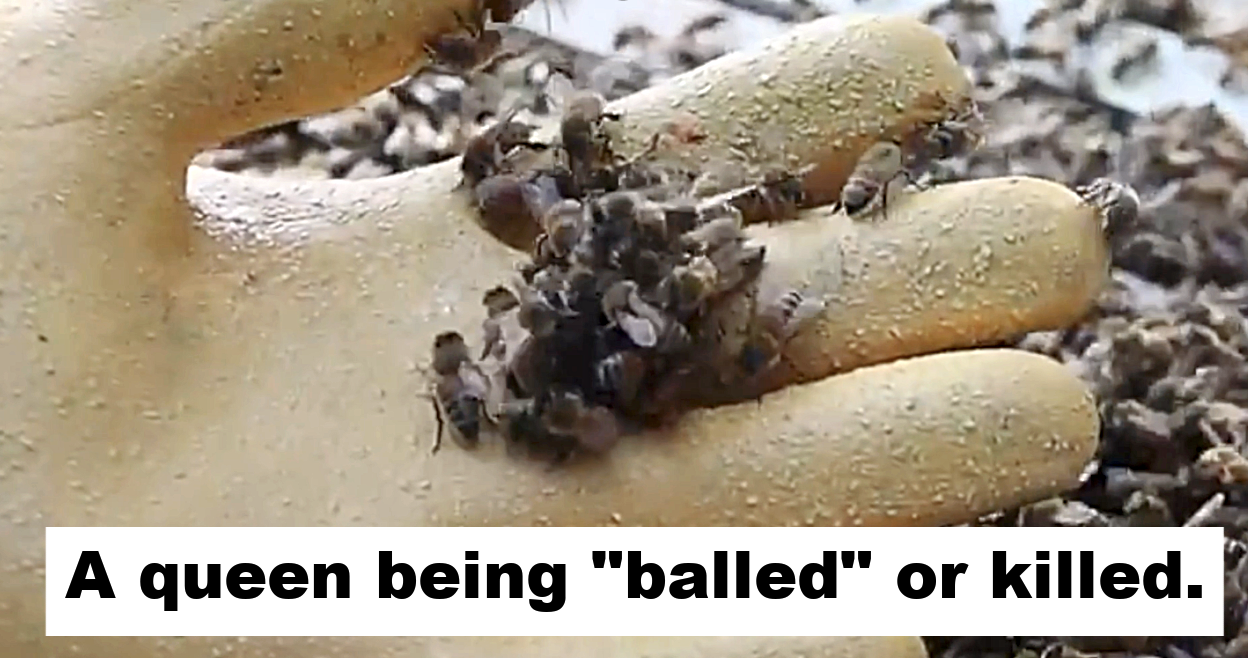
In last month’s article I wrote about the various issues that happens when our bees go queenless and what is required to ensure our bees are truly queenless. In this article, let’s dive into the harsh reality that sometimes queens just aren’t accepted.
I was speaking at the Nevada State Beekeepers Conference recently and a beekeeper ask me why he had several hives reject new queens. All the hives were similar, but some rejected new queens while other accepted their new queens. The queens were from the same batch, but three hives would not accept a new queen. I gave him several suggestions on ways to introduce queens that might help with their acceptance that I will share in this article.
The tried-and-true method is to make sure the hive is hopelessly queenless, then wait 24 hours before placing a new queen in the hive. The queen cage has candy covering her exit hole. This is to provide a timed delay as it will take several hours or days for the bees outside of the cage to eat through the candy and for her queen mandibular pheromone to spread among the colony announcing her arrival. This allows time for the nestmate smells and the signature smells of this particular colony to blend together and get absorbed onto the queen. This works most of the time. But what if it doesn’t, and they kill the new queen? Let me share my two favorite options.
The new queen does not smell right to the colony. Just like at the entrance, bees who do not have the nestmate odor of that particular colony are not allowed in. This is true of the queen as well. She does not yet have the nestmate smell. Not only are we hoping that the colony will “catch the scent” that she’s a queen, she needs time to absorb the particular smell of the hive to be accepted as one of their own.
There are several things I will try when the simple introduction method does not work. First, I’ll simply keep the cork covering the queen candy on her cage for two or three days. This may allow more time for all the smells to align. If the candy is exposed without a cork just cover the candy with a piece of tape.
Another method is to use a queen introduction frame cage. These are made with metal rods and take the place of a frame allowing the beekeeper to place the queen on a frame and confine her in this large, frame sized cage. There are two types of cages so be careful to select the right one. One allows workers to pass through the metal rods. These gaps are the traditional queen excluder spacing of 4.1-4.3 mm. The one I’m suggesting is different because it will keep out the workers. It looks the same, but the spacing is 2.4-2.6 mm which is too small for even workers to pass through.
Choose a frame that has some capped brood and some food. As the bees emerge, they will readily accept the new queen in the cage with them and this also allows more time for the queen to take on the odor of this particular hive. After several days you can remove the frame from the cage, and the queen will have a better chance of being accepted. I have found this approach to be very effective.
What about attendants in the cage with the queen? Should they be removed or kept in the cage with her during the introduction stage? I’ve heard many different opinions on this…we are beekeepers, right?
The attendants help feed and care for the queen during shipment, but they also add to the number of bees in the queen cage that do not smell like the colony. This can increase the chance of rejection especially if the attendants act defensively toward the bees in the hive. My rule of thumb, and I’m sure everyone is different, is to leave the attendants in if the colony is small, like a five frame nuc, or if the bees are calm or I’m doing a slow release with tape over the candy for a couple of days. I prefer to remove the attendants if the colony is very strong and a bit defensive.
There are times when nothing seems to work. In that case, I have found that if I can wait ten days and try again, the colony may in a place to better accept a new queen. Sometimes the colony is queenless for reasons we probably cannot comprehend. Waiting ten days allows the dynamics of the colony to change.
Queens are not cheap. If you end up buying three or four queens, attempting to re-queen a colony, it’s hard on the wallet. This is a good opportunity for me to encourage you to consider learning how to raise your own queens. Even if you only raise a small number a year, you’ll have extra queens for these colonies that might take some TLC to finally accept the one they love.
If you’d like to watch my video where I explore this topic more visit: https://www.honeybeesonline.com/davids-youtube-channel/
