
For the Love of Field Days
Click Here if you listened. We’d love to know what you think. There is even a spot for feedback! Read along below!
By: Becky Masterman
Beekeeping meetings are energizing and informative. Add live colonies and demonstrations to a meeting and you have something special. Attending a beekeeping field day should be a priority for beginner and seasoned beekeepers. The perfect combination of talks and practice, a field day is a great way to learn, get to know fellow beekeepers, and gain a bit of inspiration for your own beekeeping operation.
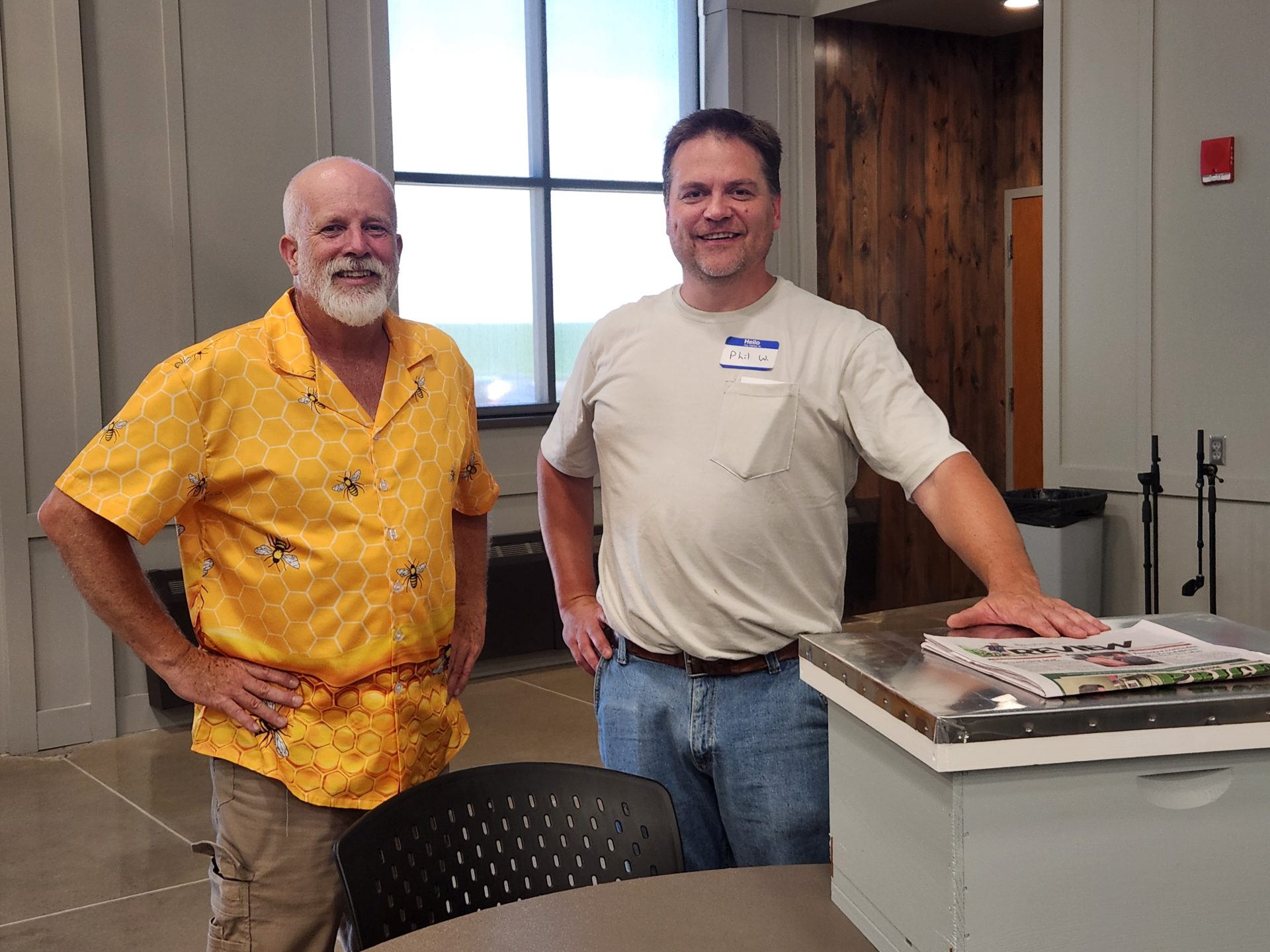
I just returned from speaking at the 4th Annual 2026 Siouxland Beekeepers Field Day. Held in early June with perfect beekeeping weather, it was a success. Organized by Phil Breed, Siouxland Beekeepers President, the day was pretty much perfect. It was flawlessly organized with talks, demonstrations, and breakout sessions.
This field day serves a region – ideally where Iowa, Minnesota, and South Dakota converge. Held at Dordt University, it was originally part of an educational effort to teach science in the classroom using apiculture. The project was funded by a grant awarded to primary investigator Professor Emeritus of Agriculture, Dr. Duane Bajema. The field day was a collaboration with Dr. Bajema’s grant, the Siouxland Beekeepers and co-coordinator, Phil Breed. The curriculum from this grant project is available for use under BEESTINGZ Dordt University – https://oercommons.org/profile/466767.
The Siouxland Beekeepers Field Day’s beginner, intermediate/advanced and bee-related tract topics provided benefit to attendees regardless of their experience. The beginner’s tract at the field day consisted of a live video hive inspection led by Bajema along with Iowa’s state apiarist Andy Joseph. New beekeepers were able to enjoy the comfort (and safety) of the classroom while being able to see eggs, larvae, and pupae. Breed then shared monthly guidelines for the first year of beekeeping. In the afternoon, the beginners suited up for a hands-on inspection of live hives under the direction of club members Ron Rynders and Dan Van Peursem. The bee-related tracts covered making creamed honey and the importance of native pollinator plants. The intermediate/advanced track topics were taught by two Phils. Phil Breed tackled on the spot (OTS) queen rearing, a graft free technique developed by Mel Disselkoen. He was joined by Tony Jungers in the field. Tony shared both his bees and his flawless beekeeping technique. Phil Westra guided beekeepers through using resource hives.
These two advanced subjects included easy to follow classroom presentations and demonstrations in the field day colonies. What made these lessons even more valuable was their adoption by the presenters. Breed uses the OTS method in his own operation. Westra has a well-tested resource hive process in his sideline operation. He not only shared his method, but impressive data about the contributions of these colonies to his operation. The students benefited from their successes and failures. That makes field day instruction valuable.
A field day agenda can’t provide an update on every topic that beekeepers need to revisit each year. But the format, talks, demos, lunch, etc. provides space for conversations in between activities. Sharing varroa strategies, honey production highs and woes, and even a new robbing screen design (www.beehacksegs.com), helps beekeepers stay on top of industry changes and opportunities. In one of these side conversations, I was impressed when a newer beekeeper shared their complex divide story. Beekeepers are benefiting from easy access to online education and video demonstrations. New beekeepers are not without extensive knowledge.

Building Better Field Days
Leave it to the Wisconsin Honey Producers Association to show us how to boost their field day with networking and competition. Their 2026 field day started with a 2-hour paddle boat cruise the night before the day of instruction. Attendees were also invited to participate in a black jar honey contest. Combine those two activities with bee education and hands on learning, and you have a fantastic field day.
Nebraska’s Bee Fun Day is co-hosted by the Nebraska Beekeepers Association and Dr. Judy Wu-Smart’s University of Nebraska Bee Lab. You might think that Wu-Smart’s expertise is enough for the day of education, but attendees benefit from multiple guest speakers and lab member presentations and demonstrations.
The Minnesota Apiculture Extension program and Minnesota Beekeepers Association (MNBA) started a field day in 2025 (which I helped organize!). Although only into our second year, the guest speakers and some of the MNBA’s commercial beekeepers provide valuable instruction to beekeepers looking to grow or improve their operations. Our group followed a great organizational tip that I learned from the Northeast Indiana Beekeepers Association’s field day events- Bring Your Own Chair (or BYOC). Depending on your venue, if chairs aren’t there, it is not too much to ask participants to bring their own.

in Iowa. Photo credit: Rebecca Masterman
Field Day Takeaways
As long as there are beekeepers, there will be field days. It might be too late to find a field day for the 2026 season, but planning to attend one in 2027 is an achievable goal. Are you passionate about beekeeping? How about a field day travel adventure? There are no residency rules for field days! With a little planning and organization (you might need to pack a veil or bee jacket), you could fit a getaway and some beekeeping education into the same weekend.
If only there was an easy to use field day list for you to research your options. Thanks to Betterbee, it finally exists. Check out betterbee.com/fielddays. If you have a field day, consider sharing the details to their site for others to find. If you are looking for a fun day of beekeeping education, check out the many field day opportunities that exist. And finally, if you have been thinking about hosting a field day, make 2027 the year for it. You won’t regret the work. The appreciation of the beekeeper attendees will make it all worthwhile.
Acknowledgement
Thanks to Phil Breed for contributing field day information to this article.
References and Resources
Phil Breed – Birdsong Bees on Facebook https://www.facebook.com/share/g/18i5Bm8rTc/
Phil Westra – Westra Apiaries – https://www.westrabees.com/
Dr. Duane Bajema’s Beestingz Project – https://www.dordt.edu/news/dordt-universitys-beestingz-inspires-next-generation
Northeast Indiana Beekeepers Association – https://neinbeekeepers.com/
