
Click Here if you listened. We’d love to know what you think. There is even a spot for feedback! Read along below!
Counting Bees
By: Becky Masterman & Bridget Mendel

How Many Bees?
What impresses non-beekeepers the most about a colony of bees is the sheer number of bees. Six hundred thousand bees does drop the jaw further than ten colonies. During a recent hive dive with non-beekeepers, we were asked how many bees were in an entire apiary. And that is when we realized that we really didn’t care. The estimate of the number of workers in an apiary is not a number that means much to us. This question did get us thinking about what is more important than the total apiary population at any given time.
Beekeeping is a prime example of the sum being greater than all of its parts. The colony is a superorganism that works together to rear brood, forage for and store food, thermoregulate the hive and reproduce via swarming and drone production. Colony worker population varies based on available resources like space and nutrition, and the time of year. Aside from its use impressing the beekeeper-adjacent community, when does the number of workers in a colony really matter?
Learning How to Keep Bees
The beauty of learning how to keep bees with a package or a nucleus colony is the ability to hone your skills with a smaller population. Learning how bees in a colony move on the frames, fly in and out of the hive, respond to your smoker and defend themselves is a manageable task when you start with three to five frames of bees. If you decide to jump in and learn how to manage bees using a two deep colony bursting with bees, the populous colony is likely going to impede your journey into beekeeping instead of gently welcoming you.
Spring Feeding
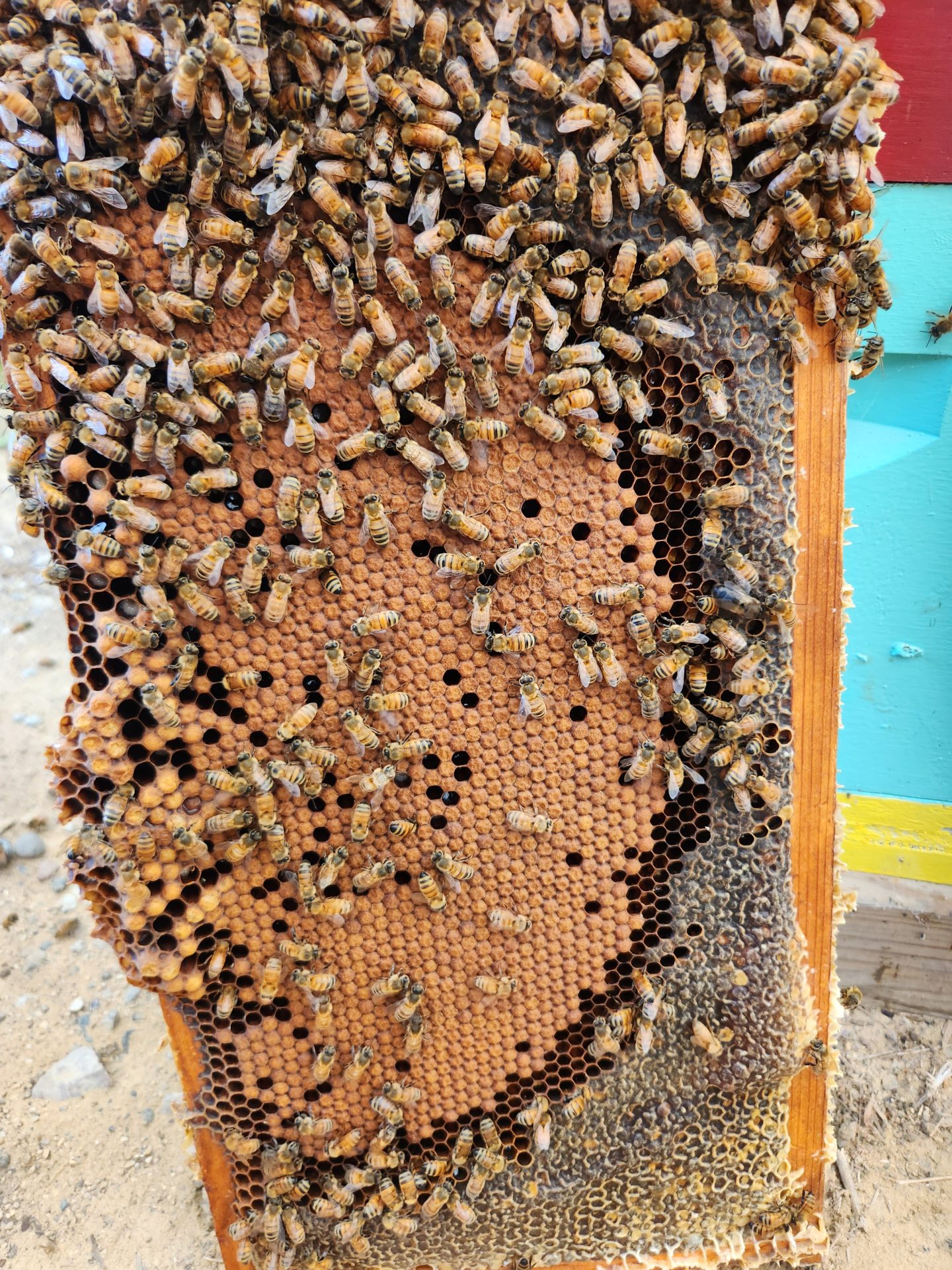
Whether you need to feed your bees depends on the availability of floral resources, the stored honey in the colony, and of course the current and expected colony population. When assessing your Spring bee food stores, look at both the adult population and sealed brood. Multiple frames of sealed brood will emerge as hungry adults. If the food stores are low in your colony, consider adding 1:1 sugar syrup to ensure that the colony does not suffer prior to floral nectar availability.
Swarming
Estimating the future colony population based on the workers and sealed brood is also important in swarm control. One of the keys to keeping your bees home (after a Spring split) is to make sure that you recognize a populous colony with multiple frames of sealed brood is going to become more populous. Growing colonies need space, so after adding brood boxes, make sure those bees have empty supers to move the nectar and bees into, or your brood nest is going to be full of nectar, the queen will have limited space to lay, and your bees might end up in the trees.

Honey Production
The art of beekeeping is to boost colony populations to increase surplus honey yields in each colony. The beekeeper’s goal is to house a populous foraging force that peaks with the nectar flow. Beekeepers artificially promote larger colonies than if the bees were making the population decisions. We give them more space, we keep them from swarming (most of the time!), and we provide early Spring nutrition boosts to encourage more brood reared earlier.
Research
Scientific papers are an adventure in reading. Although well-organized with an introduction, materials and methods, results, and discussion, the methods are critical to the interpretation of the results, especially when you are dealing with honey bee colonies. For example, would you trust an experiment about honey production if the scientists used observation hives to ask questions about honey yields? Honey bee colonies are complex animals that will act in different ways based on how the colony is established. For example, if you split a colony of bees and keep both colonies in the same yard, the parent colony in the original location will retain the foragers, and the new colony will need time to reorganize and push workers to transition to the tasks of gathering nectar and pollen. You will have different dynamics in each colony due to the different age structures in the populations.
The Science of Guesstimating
While we’ll never know exactly how many bees are in our apiaries, we can come closer to understanding our colony populations. And understanding colony population dynamics are going to inform your management. Hefting, estimating, and guesstimating are skills worth getting good at. We estimate the amount of food stores by hefting boxes and maintain a general population-awareness throughout the season, noting the business of bees between frames (seams of bees) and frames of brood. That way, we can measure the ideal spring and Summer growth, peak population, and natural population decline against that of our colonies, anticipating swarms or investigating any abnormal declines. All this said, are there any beekeepers out there who have attempted to actually count your bees? That’s completely crazy! Write to us about why you did so at: mindingyourbeesandcues@gmail.com
