
Click Here if you listened. We’d love to know what you think. There is even a spot for feedback! Read along below!
An Old Beekeeper’s Thoughts
By: James E. Tew
September Requeening
For most beekeepers, September is the last gasp time for requeening a colony. That late in the season, the replacement queens have probably been caged for much of the Summer and replacement failure would result in both a new dead queen and a dead colony. Then there is the issue of the new queen having time to develop enough brood and the newly emerged young adults needing time to begin to meet the needs of the soon-to-be interring colony. So, I feel that in most instances, I would not recommend late season requeening – but it could probably be done. Most of the time, staying with what you have – bad that it may be – would be the least harmful path. Alternatively, I suppose you could consider combining the needy colony with a stronger colony.
But it’s your call. If you feel that this colony needs a replacement queen and you are qualified to do the task, go for it. Absolutely, if appropriate, Fall requeening can be done.
A broader question would be: “Should I be requeening every year?”
Beekeeping life was simpler a few decades ago. Beekeepers were given clear instructions such as: requeen every two years, avoid pesticides, treat with Terramycin for American foulbrood prevention, don’t let the moths take over, and finally, get your supers on before the nectar flow begins – just pretty much traditional beekeeping recommendations. Well, as usual, things change – maybe due to mites and viruses – but for whatever reason, some of the basic rules of beekeeping have changed. So, should you requeen every year? Well, yes and no.

queen. Not now.
Queens
As I have said in previous articles, I am unable to find a time in beekeeping’s history when beekeepers were generally happy with their queen stock. We have always been searching for, and continue to search for, the perfect queen stock. If the opinion of beekeepers today is an indication, we have not found it.
But here’s the annoying thing, the perfect queen stock changes over time. In the 1970s, queens such as Three-banded Italian, Midnights and Starlines, were coveted strains of bees. Varroa and virus susceptibility changed our concepts of “perfect queen” stock.
Commercial queen production is tedious, weather-constrained and imprecise. The current cadre of commercial queen producers, an industry treasure of experience and ability across the U.S., seemingly is a non-renewable resource that is under siege. It takes years to become competent at routinely producing great numbers of good queens, so few new people are clamoring to become commercial queen producers.
Driven by the high seasonal demand for replacement queens, I fear that some queens are sold that are somewhat rushed in their production. By writing this, I suppose I am saying that I am one of the ones who is still looking for the perfect queen. For either the new or experienced beekeeper, when considering requeening, the first question must be, “Can I get acceptable, replacement queens at the time I need them?”
You, the beekeeper
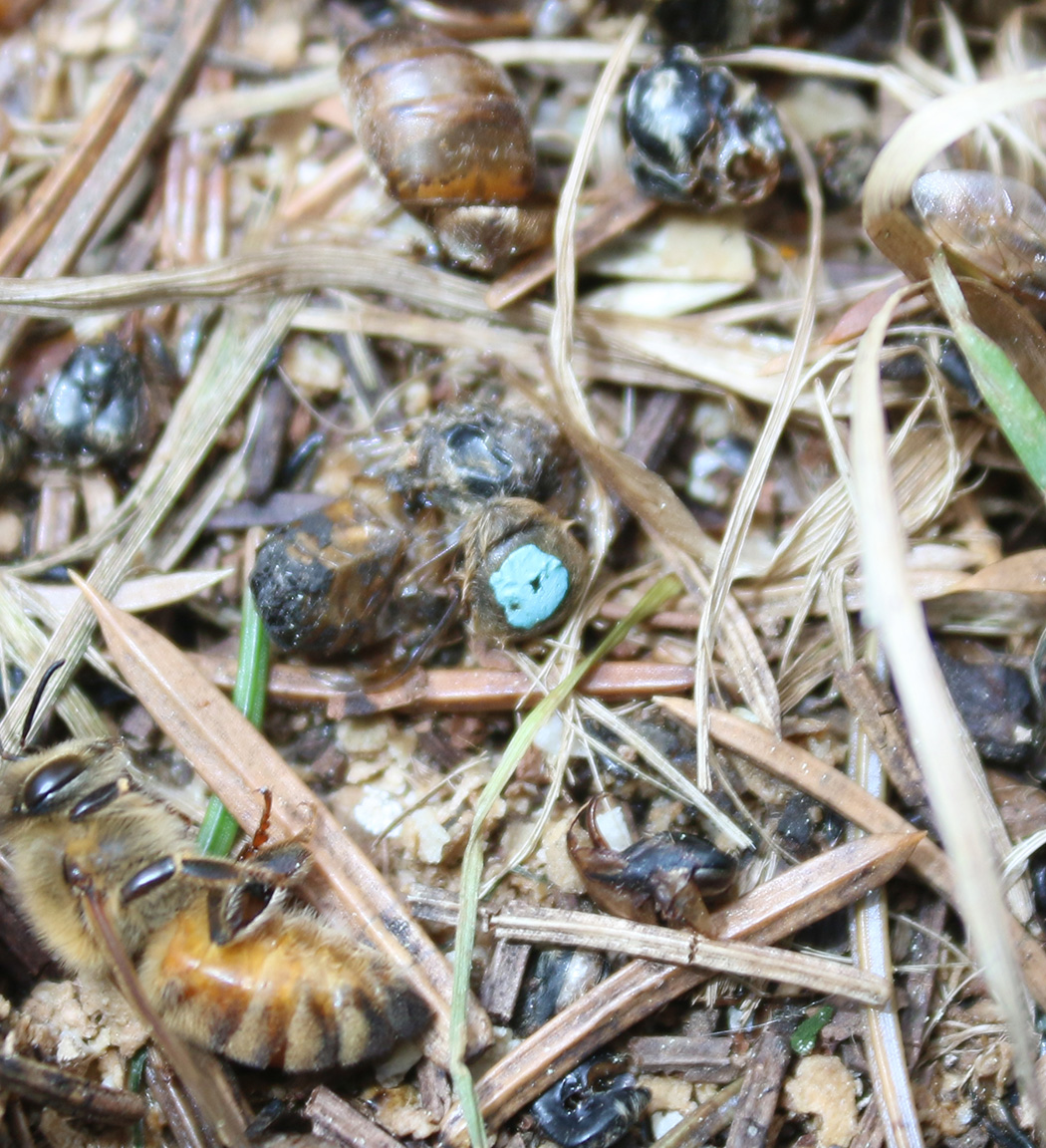
In many instances, requeening is a serious hive management undertaking. While a replacement queen may look good in the cage, for whatever bee reason, the bees sometimes don’t like her. She’s killed and tossed out front – or maybe she dies naturally and is tossed out front. Large, colorful queens are not necessarily good queens, but such features are ready evaluation parameters. It is entirely possible for small queens to actually produce good stock and head a productive colony. You and I (nor the queen producer) can look at a caged queen and tell the difference. That’s disconcerting.
The technical ability of a specific beekeeper to perform the requeening procedure is diverse. Normally, having several years of beekeeping experience would be an indicator that the beekeeper is adept enough to implement the procedure. But here’s a rub… if the beekeeper is requeening, based on the calendar, a perfectly good queen could be replaced with a queen of lesser abilities and attributes. It happens. It is a fact that occasionally, while trying to help, we actually hurt.

But alternatively, if we never requeen, choosing instead to let the colony requeen itself, it can be surprising to see how long a colony will let a bad situation go before doing something about their colony decline. Years ago, I had a 9-frame observation hive in my lab. During one season, it became apparent that the queen was failing. Increasing amounts of her brood were made up of undersized drones and the laying pattern was spotty having a “shotgun” appearance. The observation hive was tedious to open and was intended for viewing purposes only. So, I let the bees do their own thing.
Well, “their own thing” was to let the colony run completely down and then allow wax moths to invade. The bees never made any effort to replace the bad queen. I don’t know why. True, at times, we may cause unintentional hurt, but overall, requeening on a regular schedule is a good idea. We control the queen replacement process and we do it on a time frame that avoids disrupting the honey crop. Even so, use common beekeeping sense. Try to help – not hurt.
I’m guilty
I know that what I am writing here are correct management recommendations for maximum beehive performance, but at future meetings, I would not be able to face you and have you believe that I was on the money when replacing my queens. I frequently tolerate queens that are poor performers. Sometimes, it’s my crammed schedule. Sometimes it’s my health. Sometimes it’s the time of the year that is wrong. Sometimes it’s difficult to get replacement queens. Importantly, in the back of my beekeeping mind, I always know that the bees will make changes when necessary – sometimes. It’s not the best thing for maximum hive production, but I commonly tolerate queens that are beyond their expiration date.
Get experience
Do something to prepare yourself for the queen replacement procedure. A person new to beekeeping may be reticent when attempting the requeening process the first time, but there is no other way to learn. I would suggest reading until you thoroughly understand the procedure and talk to others who have already done it. Then give it a shot.
Requeen with what kind of queen?
This question is an example of why both chocolate and vanilla ice cream flavors are produced. Some of you insist on the very best queens while others of you accept any available queen. The bee journals are replete with advertisements for high quality and high dollar queens. In an ideal bee world, for which we are all striving, put in the best queen and expect the best results. In the real world, I have had the “best” queens tossed right out front with the lesser queens. Without any science to support my following comment, I can’t say that high-dollar and specially bred queens are always more appealing to the colony than lesser bred queens. (I will be hearing from some of you on that statement.) Expect some successes, but you should also expect some setbacks.
How much time do you have for your bee project? What is your skill level? Is the weather and nectar flow in your favor? For what level of random good luck should you wish? In my own bee life, I have grown to be comfortable replacing queens annually with good quality queens, but I don’t necessarily try to find the best, most hygienic, most prolific queens that are available. They will only be in my colony for a year or so. While most things that happen within the hive can be traced back to the queen’s function, not every event in the colony can be the responsibility of the queen. Is my colony in a good area for nectar and pollen gathering and not near pesticide sources? Is there a dependable water supply? Was the colony stationary or was it moved to different locations several times? Did I make splits that prevented the colony from achieving a normal buildup? The weather is always a factor? No bees, from either exceptional or marginal stock, can fly on rainy or cold days.
Is there a recommendation anywhere in this discussion?
Yes, there is – requeen regularly as is possible with the best queens available to you. Expect some rejects and failures, but overall and over time, the production and longevity of your total apiary will be improved by the procedure – just don’t ask for guarantees.
The future of old frames
While not having anything to do with queen replacement, but just to give you a reading break from me harping on queens and queen replacement, I want to write just a bit about a normal byproduct of longtime beekeeping activities. Winter killed colonies (deadouts), result in the acquisition of vacant but previously used equipment. I suspect that some of you have stacks of this kind of equipment sitting around waiting for that special day when we have time to do something with it. In my second paragraph above, I stated that things change. That is true of our beekeeping attitudes toward frames and used equipment, too.
Used, empty frames
It would be easy to hate these things. These empty frames and unkempt hive boxes take up space and they require tedious labor to repair. Mice and insects move it. Most are still made of wood, but increasingly, many are made of plastic. Essentially, each of these frames signifies a failed effort on both my and my bees’ part. Maybe that is why the task is distasteful to me.
Unless you are a person who enjoys the frame repair process, I would recommend using plastic sheet inserts for the repair process. Use wire-cutting pliers, to strip out foundation wire – if that type of foundation was previously used – and ensure that the end bars are firmly attached to the top bar. If more than a little actual repair is required to make the frame usable again, I would suggest relegating it to the kindling pile. The flat blade of a hive tool is handy for popping out the wood cleat that originally held the wired foundation or plastic insert in place.

Using the same hive tool, knock off most, if not all, of the wax moth cocoons and discard the original comb. The old, thick, dark comb doesn’t have a lot of value for anything other than starting Winter fires. There’s very little obtainable beeswax in them. Though broken cleats can be reused, I normally cut new cleats on my table saw that are just a bit short and a bit narrow. These slightly smaller cleats can be reinserted into the frame easier than the precisely fitting original cleat.
A universal challenge encountered when repairing frames is refitting foundation into different styled frames. Some may have solid bottom bars, grooved bottom bars, two-piece bottom bars, cleated top bars or grooved top bars. If you were using foundation intended for grooved or 2-piece bottom bars, frames having solid bottom bars may require you to cut a small strip from the plastic foundation to fit. More kindling?
My old longtime friend, Kim Flottum always argued that frame repair is not worth the time and effort. He had some good points. Considering all time expenditures, assembling a new frame probably takes about as much time as cleaning and repairing an old one. There is the cost of the new frames to consider – plus it seems wasteful to discard a usable old frame. Don’t spend a lot of repair time on a wobbly, old frame. It’s not an easy call.
Plastic frame repair
There is essentially no repair that can or should be done to full plastic frames. I suppose broken parts could be glued back together, but the accumulation of wax will hamper most glues from working properly. I would suggest that you recycle the plastic frame with your other plastic recyclables.
A more frequent problem with plastic frames is combs that are improperly built by the bees. Using a putty knife or hive tool, scrape the comb off back to the midrib of the frame. There’s no need to get every smidgen of old comb off, even if wax moth damage was the problem; however, it is important to get all the remnants of the misshapen comb removed. Otherwise, the bees will probably use the improperly built comb base as a template and rebuild defective comb again.
Is there a disease issue?
Bee equipment designers, now long past, intended for combs to be used for years and years. Now chemical and disease residues are forcing us to rethink that age-old procedure. Now before you all go out and burn up perfectly good, old combs, I need to say that we are not firmly at that point… yet. I don’t know any researcher who’s been gamey enough to specifically say how many seasons comb should be used before it is retired. Also, I am unable to tell you, at this time, to what extent the wooden frame itself is contaminated. Should suitable old frames be refitted and reused? For the time being, I am guessing the answer to be “yes.” Should I expect to grow old with my combs and be using them ten – fifteen – twenty years from now? I think not.
Anytime… anytime that you are rebuilding a frame, especially a frame with old comb, be watchful for signs of American foulbrood. Too often as we blame our colonies’ maladies on exotic pests like viruses or mites, the real problem are old friends like American foulbrood or simple starvation.
Things will continue to change
To greater or lesser degrees, things have always been changing in beekeeping. Today, our queen stock is not perfect. It never has been. Our techniques for introducing new queens are not foolproof. They never have been. When colonies seem to needlessly die, we are increasingly suspicious of our old comb and used equipment as a possible part of the problem.
But a clear, new answer has is not yet made itself plain. Are you and I supposed to burn up woodenware that has a potential lifespan of a decade or more because it may have a virus contamination? Years ago, I was taught that giving colonies frames of drawn comb was a good thing. It saved the bees from having to build expensive, new comb. Well maybe, or maybe not.
Our present recommendations seem better suited for a style of traditional beekeeping now gone – a time when replacement queens were readily available at a lower price and a time when high-quality woodenware could be used for twenty – thirty years. Stand by. We will work it out. Things are in flux, but when have they not been?
Some short, personal comments from Jim
This year, I have been keeping bees for 50 consecutive years. I have enjoyed every minute of my apicultural experiences. My wife of fifty-five years, and my three daughters, and their families have supported me all the time that I spent in my unusual passion. I continue to enjoy writing and talking about bees. I always appreciate the readers’ time spent reviewing my comments. Thank you.
Dr. James E. Tew
Emeritus Faculty, Entomology
The Ohio State University
tewbee2@gmail.com
Co-Host, Honey Bee
Obscura Podcast
www.honeybeeobscura.com
