
Click Here if you listened. We’d love to know what you think. There is even a spot for feedback! Read along below!
By: Stephen Biship

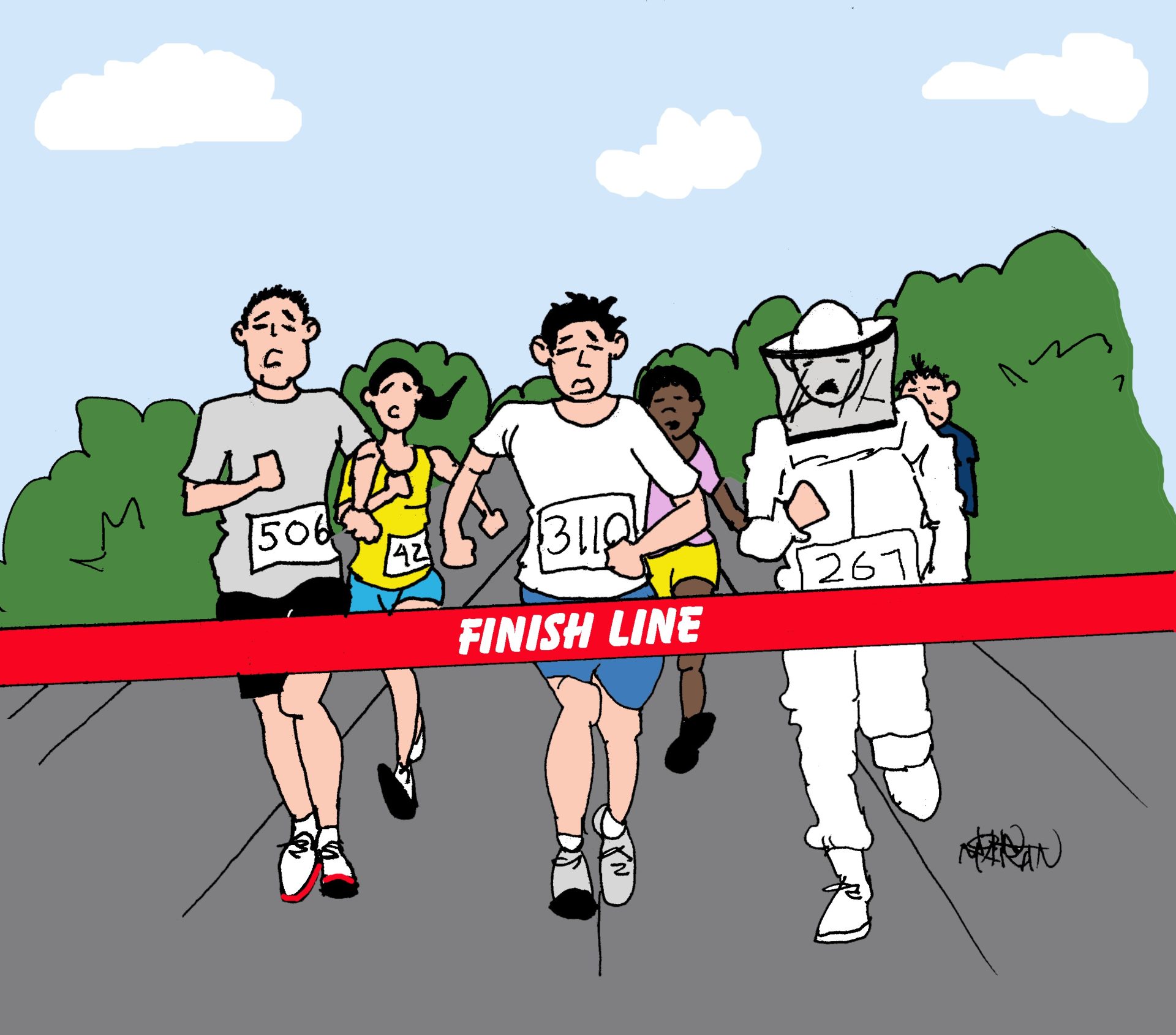
Secretly, I have always envied people who have 26.2 bumper stickers on the back of their vehicles. I assume they have actually suffered the grueling process that is training for and completing 26.2 miles of continuous human locomotion. I completed a half marathon once and hoped that it would be a stepping stone for me to complete the full torturous feat of endurance, but so far it has never happened.
In college, I embarked on a marathon of a different sort — I checked out Anna Karenina from my library. After reading it, I wondered what the big deal was, and I proudly proclaimed my allegiance to Dostoevsky and cast-off Tolstoy as the lesser of the two great Russian novelists. It wasn’t until several years later when I watched the movie for Anna Karenina that I realized my blunder — for all those years, I thought I had finished the whole book, but I had just finished the first volume of a two-volume set. So I have completed a half marathon and read half of Anna Karenina.
A few years ago, I decided to give Tolstoy another chance, and I embarked on the ultimate feat of endurance, the 1,300-page ultra-marathon that is War and Peace. The best way I know how to describe War and Peace is to imagine a Jane Austen novel with ballrooms and dancing debutantes intermixed with historical descriptions of troop movements and battles and the horrors of Napoleonic warfare. After finishing War and Peace (remind me to put a W&P bumper sticker on the back of my car) I renounced my allegiance to Dostoevsky. I now prefer Tolstoy, if for no other reason than War and Peace contains the most beautiful passage ever written about beekeeping.
You can skip through the first thousand pages and read the two-page passage in isolation, but doing so won’t do the passage justice. After investing so much time following Napoleon’s warmongering and its effects on the major characters, you slowly build to the pinnacle, when a major character is about to die, when Moscow is about to burn, when out of nowhere Tolstoy deploys a two-page beekeeping analogy. Moscow is a queenless hive. The Tsar and mayor have fled, the populace has dwindled in fear, the few remaining occupants go about their routines like worker bees still gathering pollen, but the hive itself is doomed and dying and soon to be burned. When I read this passage, I knew Tolstoy had to be a man obsessed with bees. There could be no other explanation. And sure enough, he was. His wife, Sophia, wrote in her diary,
“He bought several hives from my grandfather Islenev, read books, made frame hives and it looked as if, for him, the center of the whole world was now the apiary and therefore everyone ought to be interested exclusively in bees. I tried to absorb all the significance of the bees’ life, but it was hard for me. His work with the bees kept him away from the house and from me, and I often felt lonely and even cried.”
I’d like to think I’ve never put bees above marital felicity, but every relationship has its ups and downs. I’m grateful that my wife has always been supportive of my beekeeping obsession. Fifteen years ago, she bought me my first two hive kits for Christmas. Back then, I tried my best to find real Russian stock to populate my hives, but back then Russians were hard to come by, as everybody was hoping Russian bees would prove to be the silver bullet against varroa.
It was not to be. So far we have yet to discover a race or nationality of bees that can withstand the warmongering effects of varroa alone. Maybe one day someone will breed a line of bees that is capable of driving varroa from hives, like the Russians drove Napoleon from their borders, but so far varroa seems to be continuing its campaign for world domination. For bees and beekeepers, it is a battle or endurance.
To practice endurance, you could run a marathon, or you could read War and Peace. Both have merits, but personally I would suggest the latter. Certainly, you could do worse that to read the book that contains the most beautiful passage ever written on honey bees.
