

Click Here if you watched/listened. We’d love to know what you think. There is even a spot for feedback!
Mentoring is a Loving Gift
By: Tracy Farone
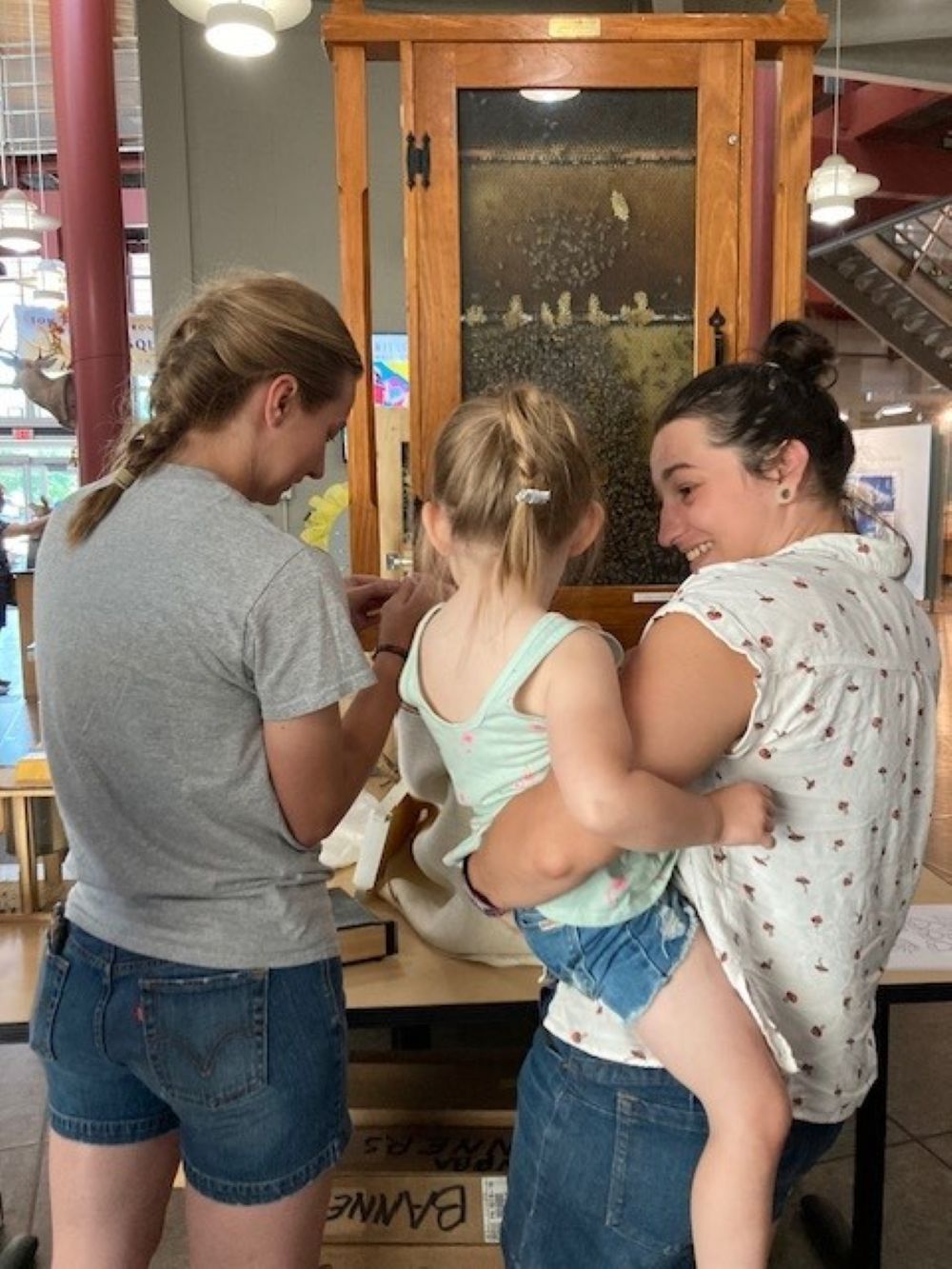
In February, we celebrate love for others. One of the greatest things you can do for someone is mentor them. As a college professor, I can attest to the fact that our younger generations need more real-life, loving mentors. Beekeeping also needs more willing mentors. Looking for a practical way you can make a positive impact in the beekeeping industry, and in the world? If you are a beekeeper that has been successful for more than 3 years, you should be mentoring someone. Do not worry about being “uncool,” just taking time out for someone can have a significant impact. Teach them something, give something of yourself in time and skill, develop a trusting relationship. Many folks are not able to “see” into our beekeeping world unless you guide them.
As we look forward to the start of a new beekeeping season, make it a point to seek out and mentor the next generation this year. They need us and we will need them. Allow me to give you an example of how one of my mentors helped me be the unique eyes for another.
When I was a kid, I had the privilege of participating in 4-H (Head, Heart, Hands, & Health…ya’ll know the pledge) raising and showing horses. Growing up mostly in a barn, I spent countless hours training, riding, and cleaning up after my horses. I even slept in stalls with expecting mares, waiting for their foals to arrive.
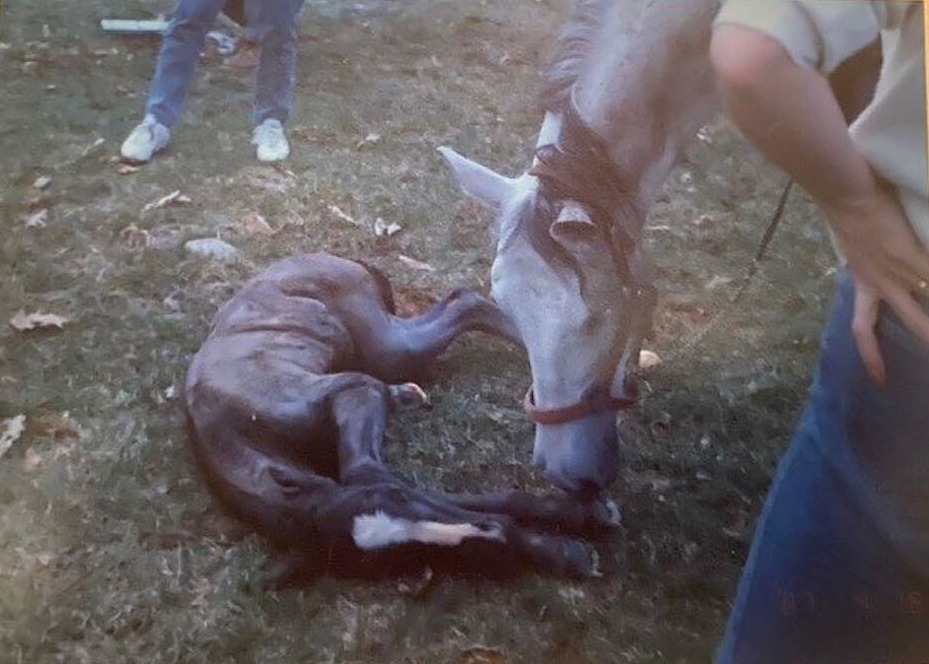
My last 4-H foal project arrived in an unusual way. It was Easter Sunday afternoon, and my entire extended family was at my grandparent’s house (located right next to the horse field) for Easter dinner. One of our very pregnant mares, Susie, started to show signs of distress in the field. This was unusual as most mares seek out solitude, often at night, to give birth. But Suz was clearly having trouble, in broad daylight for all to see. As the crowd gathered, our beloved mare went down unable to push the foal from her womb. We called the vet…on Easter Sunday. Luckily, he lived only a few minutes away from our place and was literally driving by when he got the call. This vet was Dr. Bastain, one of my key mentors, in part responsible for what I have become today.
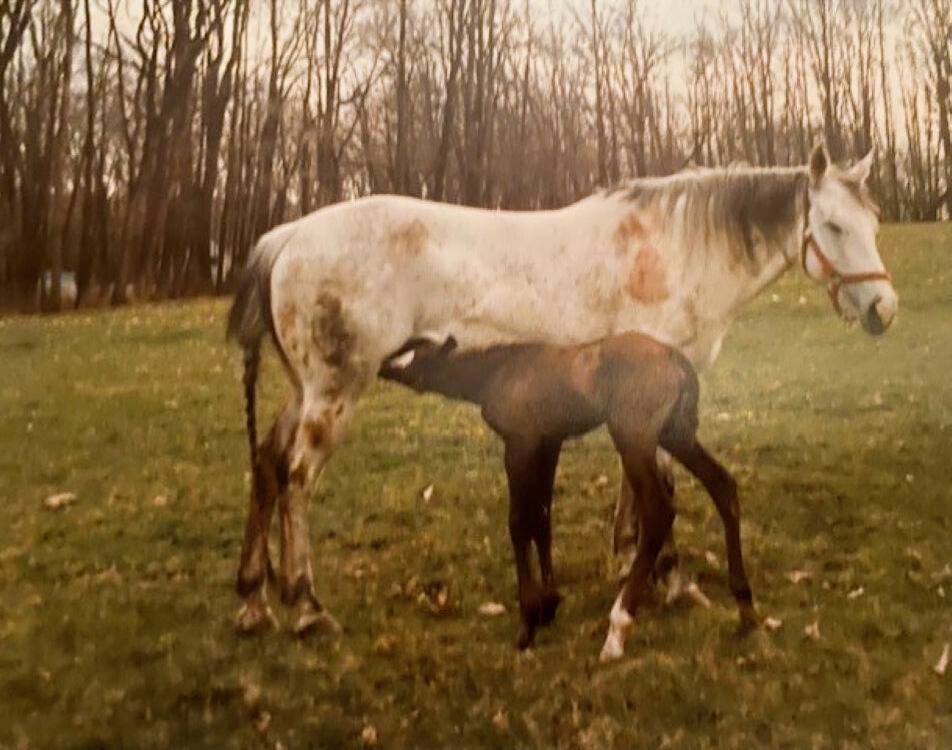
Dr. Bastain quickly assessed the mare and discovered that the foal was breech. Big trouble in a horse, most likely resulting in death of the mare, foal, or both. But the doctor had arrived early in the process, so he tried to save them both. We had lots of hands to help, including mine. There was blood…lots of blood everywhere, as Dr. Bastain struggled for some time to reposition the foal for delivery. I was amazed at the strength and dedication he showed to help this struggling mom and potential new babe come into the world. Several of us had to band together to pull out the foal. Covered in blood and amniotic fluid, my Easter clothes ruined, I became joyous. Whether by skill, miracle, good timing, or all of the above, we were able to deliver the new foal. Both mom and foal survived the grueling process. Dr. Bastain said it was the first horse breech in which he had been able to save both mare and foal, and he had been at it for decades. We named her Easter Angel.
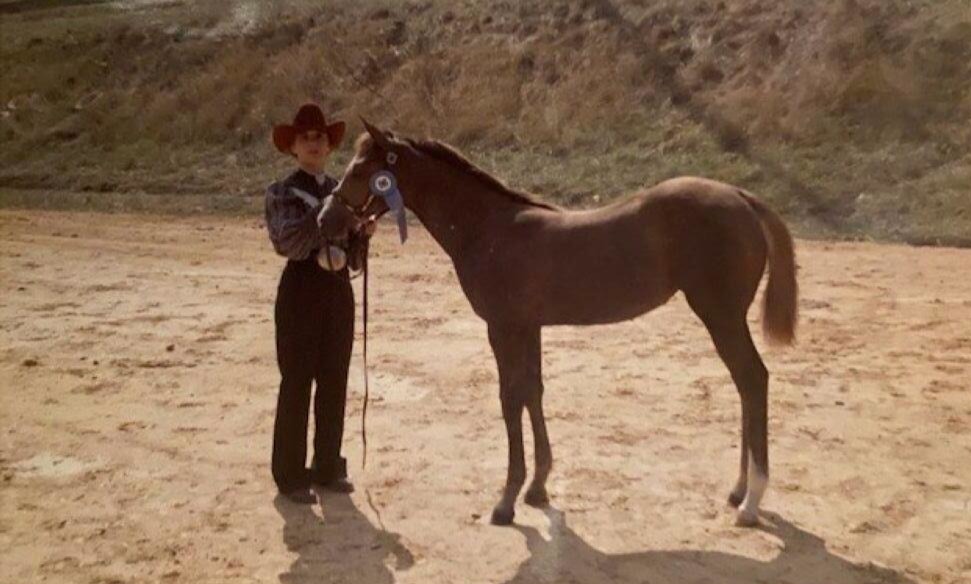
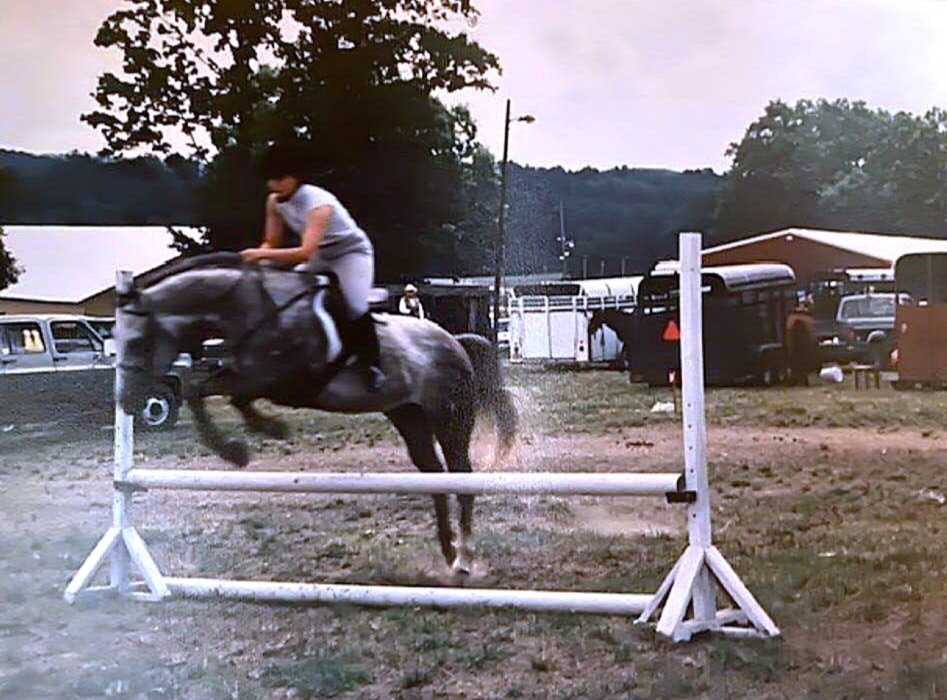
For the next four years, Angel became my futurity project. I taught her everything, how to lead and behave. I stayed in her stall when she was crying when weaned from her momma. Over the years I broke her, taught her how to ride, how to show, and eventually jump over fences. We worked together and communicated off of body (leg, seat, hands) touch pressure and voice commands. I spent countless hours on her back. She even “went to college” with me my freshman year in our last formal year of 4-H showing. We did well as a pair, often placing in State competitions.
However, over the next few years Angel developed a condition called equine recurrent uveitis (ERU) or moon blindness. ERU is a chronic, autoimmune, progressive disease in horses that was not well understood, especially at that time. Treatment was only palliative, and blindness often resulted.
The first few years of the condition were terrible. She suffered pain and confusion as she slowly lost her sight. We struggled trying to find treatments that might help. Due to her condition and being away at college and vet school, I only rode her occasionally. During flare ups, Angel became difficult to even handle. Finally, she totally lost her vision, and the disease seemed to fall into remission. But she was blind. Luckily, Angel’s mother Susie, would still lead and protect her in the field if we turned them out to pasture. However, my mother was afraid we would have to put Angel down. What good is a blind horse?
But a miraculous thing happened. I rode her. People thought I was crazy. But I knew this mare, I raised her, we knew how to talk to each other and we trusted each other. Because of all the training involving touch and auditory cues, I could be her eyes. When I was on her back, Angel perked up and was excited to go for a ride in the woods! While we could not jump over fences anymore, I used cues to warn her of any log that may run over the trail, so she could pick her feet up appropriately. I even galloped her! While out in pasture she would only walk around, but with me on her back she gladly ran down a dirt road. It was like she was her old happy self again.
Yep, galloping on a blind horse- life box check.
All those years of teaching and mentoring this young horse resulted in a trust that preserved will and skill even in the hardest of challenges. A horse that existed only due to the persistence of my own mentor. I hope this equine story demonstrates both the time and challenges involved in a mentor/mentee relationship, as well as the beauty of its rewards, and inspires you to pursue mentoring in our own apicultural spheres.