

Click Here if you listened. We’d love to know what you think. There is even a spot for feedback!
Read along below!

Found in Translation
Bee Genes: Stayin’ Alive
By: Jay Evans, USDA Beltsville Bee Lab
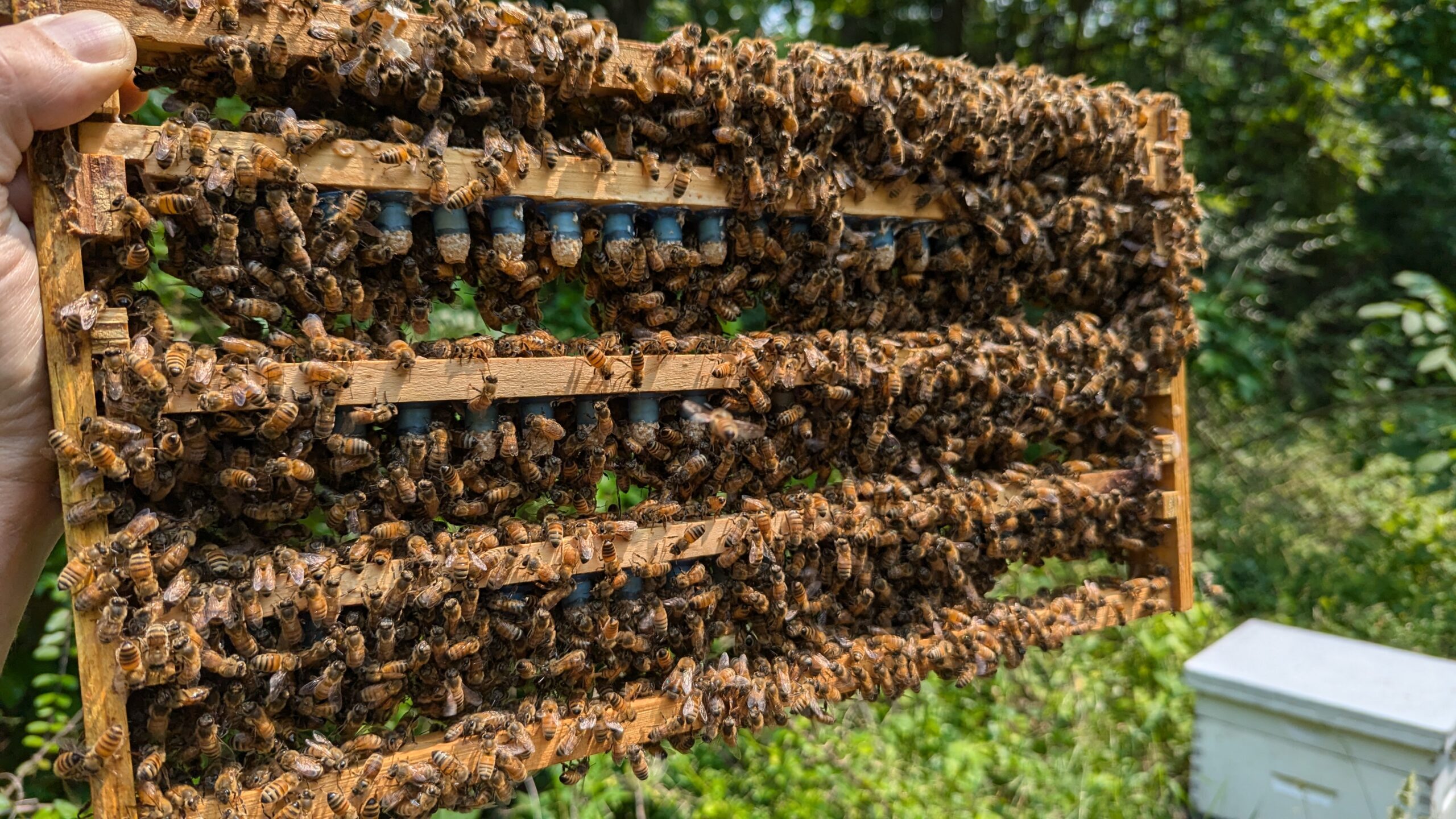
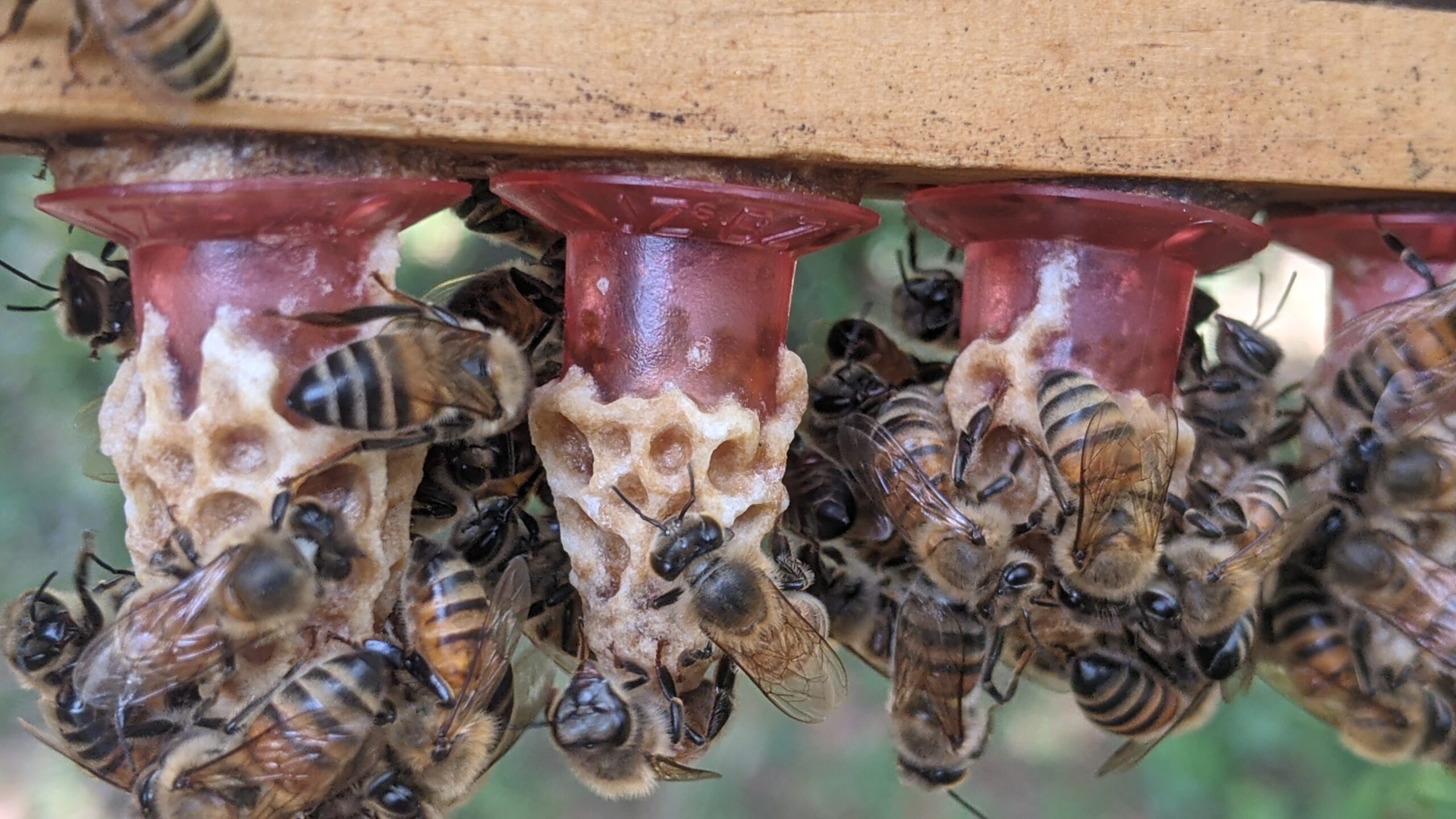
Like master gardeners scouring seed catalogues, many beekeepers spend their Winters pondering honey bee genetics. Practically, this involves comparing tried-and-true versus new places to send their cash for queens used in Spring packages and splits. With a four-fold range in queen prices, and an even greater economic difference between a flourishing or dead colony, these decisions are not trivial. Fortunately, the options for queen stock are diverse and expanding, thanks to established juggernauts as well as innovative local breeders in almost every state. This essay will not compare and contrast those queen producers (I can’t do that) but it will describe some of the tires you might kick as well as the basis behind developing selected breeding stock. I will also highlight some new resources for those among you engaged in selecting and producing queens.
I love many of the longtime queen-breeding families (again, can’t name names) and you really can’t go wrong buying stock from any of those, especially if they advertise sustainable queen production and a honey bee lineage you favor. At the same time, it is heartening to see new and old coalitions of queen breeders intent on helping each other and the industry, despite being in competition for you, the queen-buying public.
So, what do these breeders focus on and what should you ask for from your own queen source? The two trending targets for stock selection are 1) individual and collective traits that adapt bees to specific climates and 2) traits that help bees resist or tolerate mites. After decades of public research and refinement from breeders, the tools used to identify and maintain these traits are now commonplace. Many breeders test their stock with one or multiple measures of disease resistance, with some going all the way to raise bees that have little or no management help in combating mites and other diseases. Breeding ‘local’ bees adapted to specific climates is a younger effort but one that has gained purchase worldwide, often via partnerships among competing local breeders keen on floating all boats a little higher. There are many groups and clubs focused on combining mite resistance traits with regional genetics, but I have truly enjoyed recent conversations with the Sustainable Beekeepers Guild of Michigan (https://sbgmi.org/) and learning about their Northern Queen Initiative. Like ABBA, their efforts reflect a mix of individual tried and true production efforts alongside serious efforts to corner tricky honey bee genetics via instrumental insemination and relentless book-keeping. Most importantly for the queen-curious, they offer two free online expert classes in breeding and biology at the above website, as an entry for more in-depth study.
If you have joined the queen breeding game, or simply want to increase your knowledge of what it takes, there are three recent resources that are pretty essential. First on your reading list should be Honey Bee Genetics and Breeding (Wicwas Press; www.wicwas.com) by Robert L. Page, Jr. This book nicely modernizes and simplifies a lifetime (or many!) of work focused on the hows and whys of collecting, maintaining, and sharing genetic traits that make quality queens. Pioneer queen breeder Susan Cobey crafted a great review of this book and its implications for breeders in Bee Culture (https://beeculture.com/honey-bee-genetics-and-bee-breeding/) that describes all that you will find.
A second huge resource, just published by a collection of scientists from the international Colony Loss Network COLOSS (www.coloss.org), gives some of the best new techniques for isolating genes and producing quality mated queens (Costa, C., Meixner, M., Carreck, N., Uzunov, A. and Büchler, R., 2025. Sustainable Honey Bee Breeding: A Scientific Guide for Future Beekeeping. https://link.springer.com/book/10.1007/978-3-031-94204-4). This 250-page book is heavy on field-relevant techniques for starting and running a queen-producing enterprise, arguing for better ways to assess traits, mate queens on the wing or inside, and score the resulting progeny. There is also an informative chapter weighing the relative costs of selection programs, disease treatments, and colony losses. The book ends with 20 pages of interviews with established queen breeders and researchers from around the world, itself a great read.
The last recent bee breeding resource might be a little niche, but if you are using instrumental insemination to push your breeding and production stock, Manuel Du and colleagues in Germany presented a nice modelling effort aimed at determining how best to plan bee parenthood (Du M, Bernstein R, Hoppe A. 2024. Comparison of pooled semen insemination and single colony insemination as sustainable honeybee breeding strategies. R. Soc. Open Sci.11: 231556; https://doi.org/10.1098/rsos.231556). Their focus was on the sperm side and they relied on holistic measurements of queen breeding values. As a technical point, you can select either individual drones from ‘high-value’ colonies to collect sperm for individual matings with unrelated queens, or you can pool sperm from massive numbers of drones (100’s) across multiple colonies into a desired source pool and then mate all of the queens in your operation with a drop from that pool. Their efforts suggest that mating queens with known small drone pools, then testing offspring of those matings for breeding traits, gave a significantly higher rate of genetic improvement. Since in the next generation the ‘winners’ of these one-source matings came from a smaller slice of genetics they warn against inbreeding, but your careful breeding books can minimize this. In the end, this method was viable with little inbreeding for 70 generations. On the sobering side, even the most efficient methods are predicted to take years or decades, even, to shift the population; bee selection is for patient souls.