






Click Here if you listened. We’d love to know what you think. There is even a spot for feedback!
Read along below!

The Allied Forces
By: Stephen Bishop
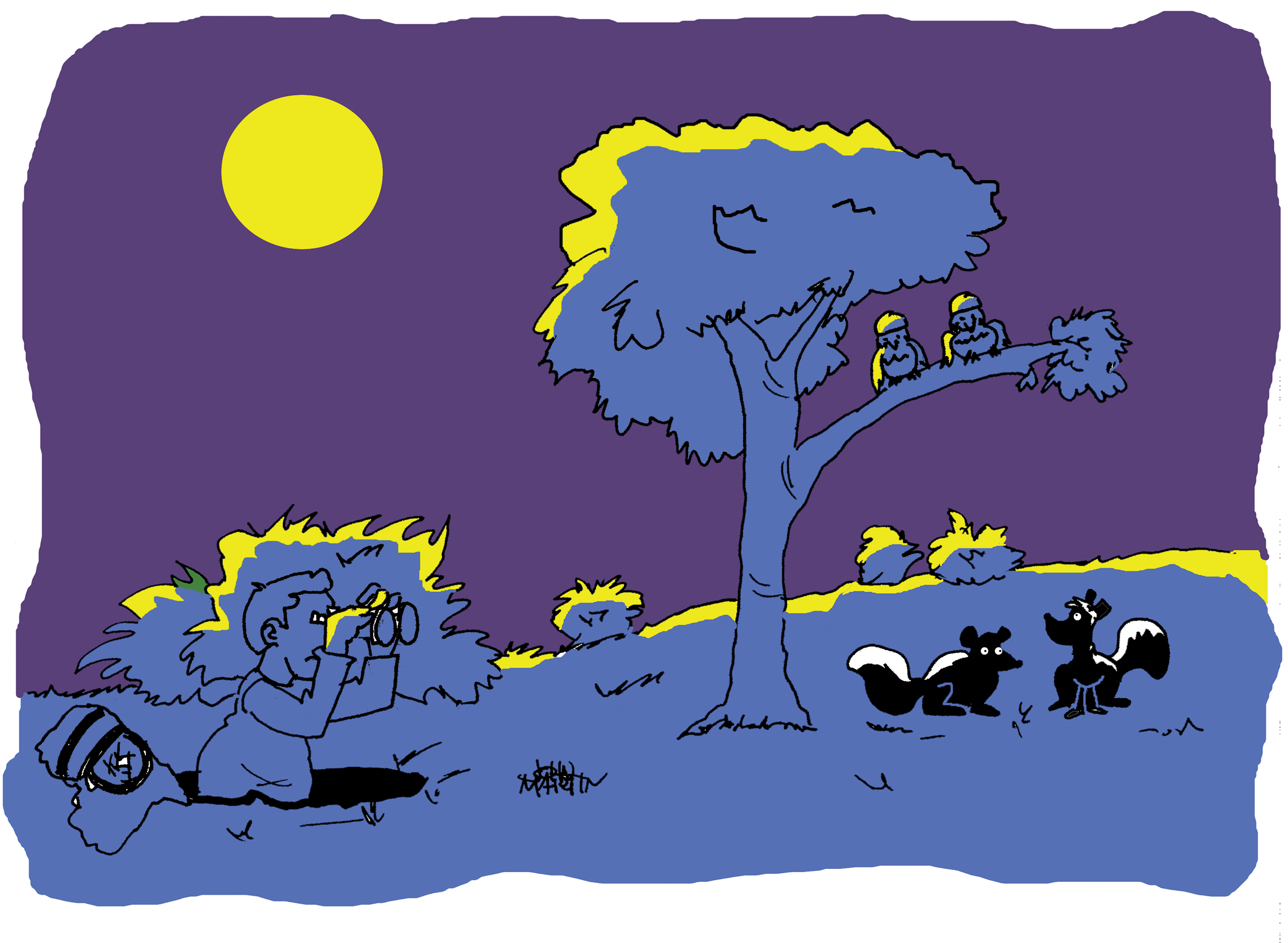
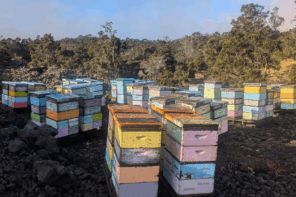
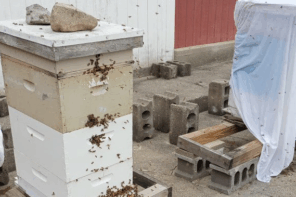
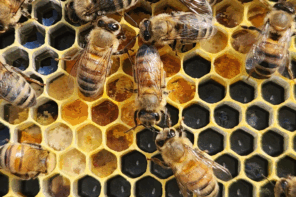
Sometimes it feels like we’ve just been plopped down on this Earth and are nothing more than insignificant bystanders in the cosmic battle between great horned owls and common striped skunks. Apparently, our farm is ground zero for this struggle between the species. I suppose one reason we have so many skunks is because we have so many beehives, and skunks are natural predators of bees.
For many years, I assumed skunks had no natural predators except for cars and other non-sentient motor vehicles. I was resigned to the idea that if Elon Musk ever produced a car capable of cognition, Earth itself would be doomed to fall under the dominion of skunks. No car in its right mind would ever fool with a skunk again, and skunks would then be free to roam and proliferate under cover of darkness — under cover of barns and outbuildings and farmhouses — without fear of getting squashed on roads.
It never occurred to me that humanity still had one last hope in the fight against the waft sweeping the countryside. At least, it didn’t occur to me until one night when I was burrowing beneath my pillow in an attempt to muffle the chorus of hoots echoing from the trees outside our farmhouse.
“What do hoot owls eat?” I asked Google. I am ashamed to say I was probably wondering if there was a way I could cut off the owls’ food supply and in so doing drive them to trees outside other farmhouses where the inhabitants are deeper sleepers. Before then, I didn’t even know that the proper name for a hoot owl is a great horned owl — or that great horned owls regularly consume skunks.
Over the years, I have had many losing battles with skunks, most of which involved me temporarily losing friends and close acquaintances, especially those who stood closer than ten feet. Any predator of skunks is an ally of mine, no matter how annoying their nocturnal communications. On some nights, I have counted four different owls within hooting distance of my pillow, but it no longer disturbs my slumber knowing they may be hooting about the movements and whereabouts of the enemy.
Great horned owls have failed to evolve a sense of smell, so they are impervious to blasts from the hindquarters of the skunk. I had often thought of skunks, with their advanced technological firepower and ability to scurry stealthily and pop up where you least expect them, as nature’s version of Panzers blitzing farms and fields.
Little did I know, great horned owls are Spitfires leading the Allied Forces in defense of the homeland, while the infantry regroups and thinks of novel ways to counterattack. For instance, last week, I trapped a skunk using barbeque I smoked myself. It was a bold move — I’m sure skunks could never fathom the idea that a Southern man would sacrifice hickory-smoked pulled pork in an elaborate ruse to trap a skunk, but sacrifice I did. Some of my neighbors considered it a subterfuge on par with Churchill’s deployment of inflatable tanks and armored vehicles. “It’ll never work,” they said. “Just give the barbeque to us instead.”
It did work, and I’m proud to report that there is now one less skunk terrorizing our farm and hives — thanks to the combined efforts of the Allied Forces.
For more tales from the front lines of farmyard warfare, subscribe to Stephen’s free farm newsletter at substack.com/@misfitfarmer and join the Allied Forces.